
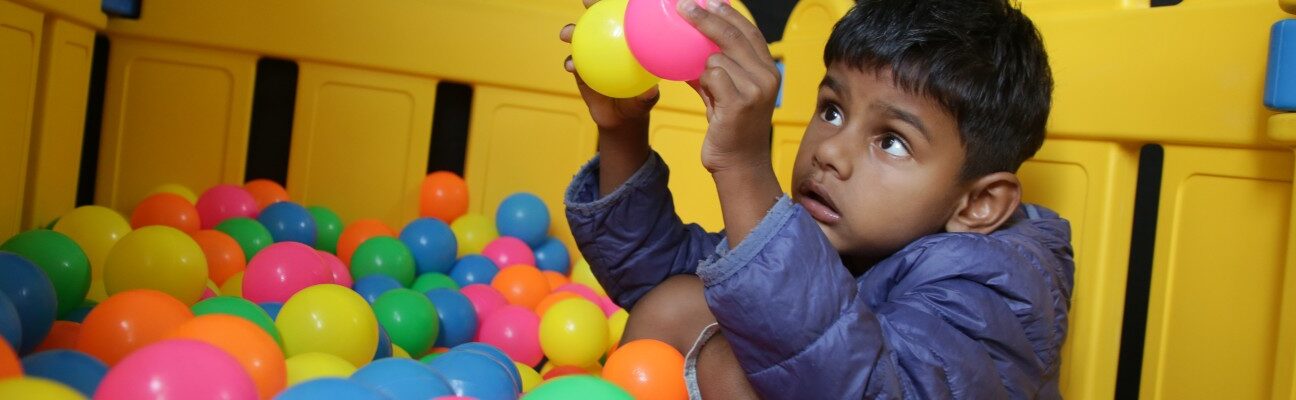
The case for collaboration
Play is a core part of childhood development, learning and well-being.
For children with disabilities, it represents a powerful opportunity for inclusion, and it can build other children’s understanding of different abilities. But for too long it has been under-recognised as a transformative force in children with disabilities’ development.
To highlight the significance of play for children with disabilities, Right To Play, which supports play for children in humanitarian and development contexts, and global deafblindness charity Sense International have collaborated. Together, they have co-created new guidance on how to use play to support learning and well-being for children with deafblindness and complex disabilities.
The resource is shared on Sense International’s Global Deafblindness Resource Hub. The hub hosts information and guidance for people with deafblindness, families and educators across the globe, ranging from information on rights to daily living activities and accessibility support.
The platform brings together sector partners, practitioners and stakeholders to share knowledge. It welcomes co-development as a way to share essential resources which people with deafblindness and other complex disabilities may not otherwise be able to access. And it shows how powerful collaboration can be for accelerating impact in an increasingly challenging environment.
The power of play for learning and inclusion
Play is how children engage with and understand the world. It plays an intrinsic role in the development of their brains and socio-emotional skills. From strengthening bonds with family and friends to improving mobility, reflexes and cognitive abilities, play makes us stronger, more resilient and better connected with one another.
Play-based learning has been proven to make education more inclusive for children with disabilities, including deafblindness and other complex disabilities, particularly when aligned with Universal Design for Learning principles. By allowing flexibility, creativity and different forms of participation in learning, it offers multiple ways for children to engage, access information and express themselves, and can respond to different needs and abilities.
Play-based learning can reduce many of the barriers present in traditional instruction, which heavily relies on reading, writing or listening – things that may not be accessible to children with complex disabilities, especially outside of specialist learning environments or where high-level support or assistive technology is not readily available. Play enables children to engage in ways that work for them, whether through movement, communication or interaction.
Play also creates opportunities for children to develop empathy, and it creates awareness of different needs and abilities. Through collaboration and shared experiences, children can build allyship and develop strong relationships without barriers to communication. This can help children with disabilities build confidence and feel valued and included.
When a child with deafblindness is able to play with their peers, it creates awareness among other children, and even teachers and caregivers, encouraging them to consider how to make adaptations to enable communication and engagement. It also helps to tackle stigma and demonstrate the strengths and abilities of people with deafblindness and complex disabilities, and what can be achieved when barriers are addressed and broken.
Join Bond’s Disability and Development Working Group
Influence government and other stakeholders to ensure people with disabilities are considered in all international development policies.
Join the Working GroupMaking play accessible through the Global Deafblindness Resource Hub
The power of play for learning and inclusion is at the core of Right to Play’s programmes. Since 2000, the INGO has been supporting play in humanitarian and development settings to help children stay in school and learn, heal from trauma and get the best start in life.
The Play Opportunities for Wellness and Education Resource (POWER), developed by Right to Play with funding from the Lego Foundation, is a collection of 100 play-based learning activities created to support parents, teachers and carers to promote children’s learning and well-being. The activities build critical skills, like confidence, collaboration and problem-solving.
The collaboration between Right to Play and Sense International, which brought POWER to the Global Deafblindness Resource Hub, will connect children with deafblindness and complex disabilities with opportunities to learn through play. It also means parents and teachers can access information on creating accessible, inclusive environments for children with disabilities to interact and engage with their peers.
The resource includes a section on children with disabilities and play, which explains how to make these games inclusive, so everyone can fully participate and benefit. It encourages facilitators to think about each participant’s specific needs and abilities and ask for their input on how they would like to play. Sense International’s teams are already using the guidance in inclusive education programmes. They have found it helpful for inspiring creative ways to adapt play activities for children with deafblindness so they can be included alongside their peers.
Collaboration and co-development
Collaborations like these are the ultimate goal of the Global Deafblindness Resource Hub: to share and develop resources from partners and experts across sectors, making vital information accessible to people with deafblindness and their families while encouraging partners to consider how to include people with deafblindness and complex disabilities. Through co-development, both charities’ goals were realised. The collaboration is highlighting the importance of play for children with disabilities, creating new ways to adapt play for learning and well-being, building awareness of deafblindness and breaking down barriers to inclusion and participation.
As the hub continues to grow, Sense International aims to encourage further collaboration through cross-sector partnerships to develop and share resources. The goal is to create long-term sustainability, scale impact and provide a space for innovation and shared advocacy.
Collaboration is rapidly proving essential in a sector with shrinking resources. Rather than seeing the challenges, we must see the opportunities co-development brings, helping us to work more effectively as a sector, avoid duplication, add value and deliver stronger outcomes for the communities we work alongside.
Learn more on the Global Deafblindness Resource Hub.
Got an idea for collaboration? Get in touch with [email protected]
Related content
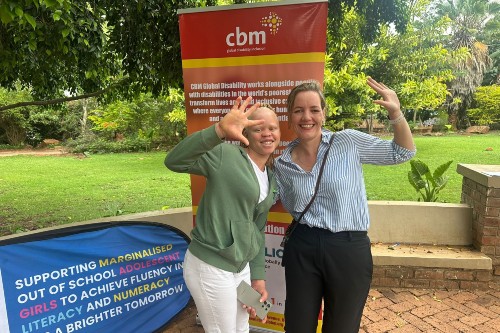
From exclusion to opportunity: how disability-inclusive education is transforming adolescent girls’ lives in Zimbabwe
Through strong partnerships, inclusive teaching and vocational training, an education programme for adolescent girls in Zimbabwe is helping thousands of marginalised girls – including girls with disabilities – build brighter futures.
The case for collaboration
How co-development is helping to transform learning through play for children with deafblindness and complex disabilities. A collaboration between Right to Play and Sense International.
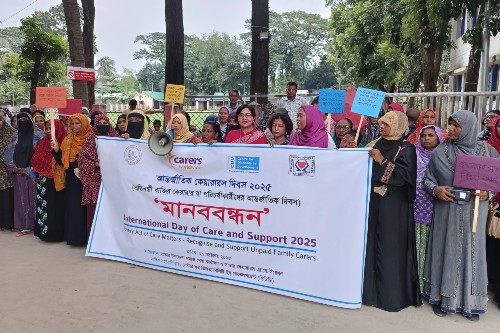
Why supporting unpaid carers strengthens society, and why locally led action matters
It is Carers Week, a time to raise awareness of unpaid care, highlight the challenges unpaid carers face and recognise their contribution to families and communities.

Category
News & views