

Building disability-inclusive futures
Despite there being 1.3 billion people with disabilities worldwide, development programmes and research continue to exclude or underrepresent them.
Since 2018, the Foreign, Commonwealth & Development Office (FCDO) has funded the Disability Inclusive Development (DID) programme, a flagship initiative which aims to improve the lives of people with disabilities and generate significant evidence on what works to deliver results on inclusive development.
DID consisted of an intervention arm: the Disability Inclusive Development Inclusive Futures programme and an evaluation arm: the Programme for Evidence to Inform Disability Action. As the programme comes to an end, the IDS Bulletin has published a special issue to draw together evidence produced under the programme and highlight lessons learned by the partners and participants.
Disability-inclusive development practice
For nearly 60 years the IDS Bulletin has published articles that bridge academic, practice and policy discourse relating to a range of development challenges. Despite the clear relevance of disability to the development sector, this is the first issue to explicitly focus on disability. The articles are written by a range of researchers and practitioners, resulting in rich content which is heavily grounded in disability-inclusive development practice.
A recent Bond blog set out a strong argument for why research on disability and inequality must include people with disabilities. This special issue includes the contributions from people with disabilities as well as representatives of Organisations of People with Disabilities (OPDs) who work with and for them. The articles focus on three themes: strengthening the evidence base, cross-cutting issues relevant to disability-inclusive development, and the central role of OPDs.
Strengthening the evidence base on disability-inclusive development
The first theme mirrors the important role that research and evidence played in the DID programme. Several articles analyse programme and secondary data to explore specific issues relevant to disability-inclusive development.
Two of the articles focus explicitly on evidence and research approaches. The first reflects on experiences of undertaking disability-inclusive, participatory, qualitative research. The second highlights how impact evaluations have strong potential for producing evidence on disability and development. Here, the authors call on others to continue generating actionable evidence to help ensure no one is left behind in reaching development goals.
Join our Disability and Development Working Group
This group works to influence government and other stakeholders to ensure people with disabilities are considered in all international development policies.
Find out moreCross-cutting issues for disability-inclusive development
Evidence shows that there are cross-cutting issues which must be considered in addition to specific programmatic priorities for inclusion to be achieved. Different interventions may be required in different contexts, but certain issues are found to be relevant across contexts.
Disability stigma is found to be a pervasive barrier to disability inclusion across countries and contexts. Stigma exacerbates the marginalisation and social exclusion of people with disabilities, resulting in low self-esteem and diminished wellbeing. The inclusion of people with disabilities with high support needs is also discussed. People with high support needs are among the most marginalised people with disabilities in various settings, and steps to intentionally include them must be taken.
Another cross-cutting issue is safeguarding. As people with disabilities are more likely than their nondisabled peers to experience abuse and be excluded from justice systems, programmes must consider a comprehensive, localised disability-inclusive safeguarding approach, involving OPDs, to keep participants safe.
Another cross-cutting factor explored is transport. Without accessible transport, people with disabilities in any context will face barriers to accessing services and jobs. This restricts their ability to benefit from development programmes and fully participate in society.
Nothing without us: the central role of OPDs
A central message from the issue is that to deliver disability-inclusive development, OPDs and people with disabilities must be meaningfully included. Sustained investment in OPDs can drive real change.
OPDs can also play an essential role as partners for thematic projects, such as in health and education, due to their connection to people with disabilities, access to local communities and understanding of local contexts.
Working together for an inclusive future
Partnership was the foundation upon which the success of the DID programme was built, and that spirit of collaboration has been drawn upon to create this issue.
Ensuring development is disability-inclusive is a collective responsibility. The development sector must work together to continue to ensure that future development programmes and research meaningfully include people with disabilities and no one is left behind.
The IDS Bulletin issue Building Disability-Inclusive Futures is an open access publication. It is available in a number of accessible formats, including an easy read version.
Related content

Working differently: what we learned from prioritising wellbeing and flexibility in the workplace
Jess Gleeson, Head of People and Culture at ADD International, explains how the organisation has rethought the way it works as part of its commitment to wellbeing, flexibility and disability justice — and what it learned from a year of trialling a new approach.

Re-imagining the future of the INGO
Mary Ann Clements, co-lead of ADD, reflects on the changes the organisation has made so that funding can flow more freely and directly to disability justice movements in other countries.
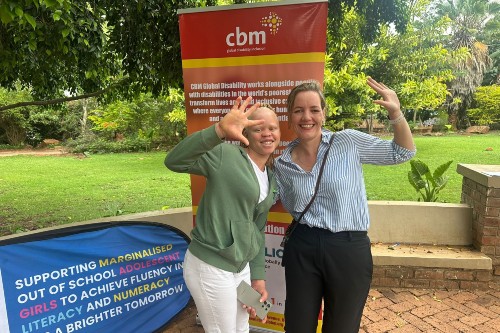
From exclusion to opportunity: how disability-inclusive education is transforming adolescent girls’ lives in Zimbabwe
Through strong partnerships, inclusive teaching and vocational training, an education programme for adolescent girls in Zimbabwe is helping thousands of marginalised girls – including girls with disabilities – build brighter futures.

Equity, diversity & inclusion
Programmes and events to nurture a more inclusive and equitable NGO sector.

Category
News & views