

What genuine youth partnership looks like
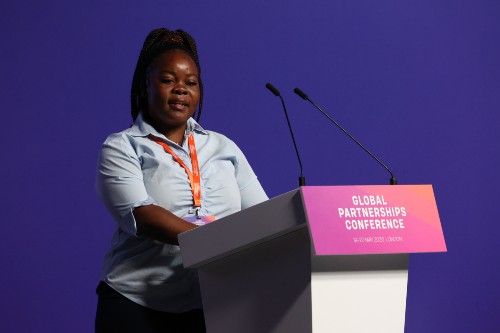
At the Global Partnerships Conference in May, young people from across the world presented the Ten-Point Plan for Change, ten demands built from consultations with young people, setting out what genuine partnership must look like.
This is not about a tick-box exercise. It is about impact. Lived experience helps people understand problems more deeply and provides the knowledge needed to develop effective solutions. In today’s world, children and young people often face some of the most serious global challenges. Young people are already active stakeholders with valuable knowledge, ideas and practical solutions. They should be recognised as partners in decision making, not just as participants in discussions.
Ask yourself, who holds the power?
When do children and young people truly hold real partnerships in decision-making spaces? In many settings, young people are asked to share their views, but they are not always included when final decisions are made.
This means youth voices are heard but not always acted upon. Real participation should mean being part of decision making, not just providing opinions.
International frameworks already recognise the need for inclusive participation. The UN Sustainable Development Goal 16 (Peace, Justice and Strong Institutions), call for open, fair and inclusive decision making at all levels. This is directly linked to ensuring that children and young people are included in decision-making processes, not asked for their views after decisions are already made. However, there is still a considerable gap between global commitments and how decisions are implemented in practice.
The 10-point plan clearly highlights that accountability must go beyond statements. It must be shown through real action and investment. Children and youth engagement should not remain at the level of consultation. It should be part of decision making from the beginning to the end.
Radical accountability must become the standard
Young people are increasingly being invited into conversations that shape policies, programmes and funding decisions. This progress should be celebrated. However, the development sector must move beyond listening to young people and become genuinely accountable to them.
As recognised in Article 12 of the UN Convention on the Rights of the Child, children and young people have the right to express their views and have those views taken seriously. Yet too often, young people are consulted without seeing how their contributions influence outcomes.
I experienced this firsthand in Sierra Leone during consultations on the Child Rights Bill. Children and young people were invited to share recommendations on issues affecting their lives. We invested our time, shared our experiences and proposed solutions we believed would strengthen protections for children. However, once the consultation ended, there was little feedback, and some recommendations that mattered most to young people were not reflected in the final outcome.
This experience reflects why the 10-point plan calls for radical accountability. Young people should not only be consulted but informed about how their views have shaped decisions and remain engaged throughout implementation and evaluation.
For governments, donors, and NGOs, accountability means investing in youth-led initiatives, supporting local solutions, and creating genuine opportunities for shared decision making.
Young people do not simply want a voice; they want to see the impact of that voice.
Accountability doesn’t end when the conference does
Radical accountability is not a slogan; it must be a measurable, enforceable commitment.
In our meeting with the UK Minister for International Development at the conference, we raised what we believe is the central issue: a compact signed at a conference means nothing unless there is a mechanism to track it, and young people must be part of that mechanism.
What I have learned since is that radical accountability cannot only be a demand we make of institutions. It is something young advocates must practise ourselves.
Some leaders who were visibly committed in that room have gone quiet since. That must be named. But some relationships have deepened precisely because we kept showing up. Three weeks after GPC, I was in parliament at a Bond Disability and Development Group event, marking 20 years of the UN Convention on the Rights of Persons with Disabilities. That invitation came directly from a relationship built at a GPC side-session. It is a small but real example of what sustained engagement produces.
The sector often frames youth accountability and power-shifting as something it delivers to young people. We’re asking you to reframe it. Radical accountability is reciprocal; it requires institutions to respond to follow-up emails, include young people in the structures that outlast conferences, and match their persistence with ours.
We are doing our part. Are you doing yours?
Related content
Justice that Heals: a new model to help address the global issue of child sexual abuse
Over 370 million girls and women globally have been subjected to rape or sexual violence as children and many experience devastating, lifelong consequences. Kids Alive International has established a new model to address this global problem.
What genuine youth partnership looks like
Four young advocates reflect on the idea of radical accountability and a 10-point plan that could usher in an era of genuine youth-adult partnership.
“Real change does not come from the efforts of a few”: reflections of a UN youth delegate
Aneurin, the UK government UN Youth Delegate, argues that the world cannot wait for leaders to wake-up – protecting and furthering sexual and reproductive rights starts with us all.
