
Justice that Heals: a new model to help address the global issue of child sexual abuse
Globally, at least 1 in 5 girls experience sexual violence – 1 in 8 for all children – with some regions even higher.
That’s on a similar scale to the number of girls and women living in extreme poverty.
The consequences of each and every case are devastating. Anxiety, depression, chronic shame, low self-esteem, challenges in forming healthy relationships, intense and unpredictable emotional reactions, flashbacks, nightmares and more. Irrespective of culture and local norms, most survivors carry this trauma into adulthood.
Ineffective response systems
Even in countries that have a strong and progressive legal framework to protect children, such as Zambia, victim support services are largely ineffective. In Zambia, legal systems and associated child welfare services lack understanding of childhood trauma. As a result, there are no child-friendly processes to pursue justice nor to provide trauma counselling services.
And that’s in a country where 28% of girls aged 14-18 describe their first sexual encounter as unwanted.
For the rare cases that are reported, victims are invariably re-traumatised, often having to recount their statements numerous times, and sometimes sitting directly across from their aggressor. Most judges and lawyers exacerbate this trauma because they do not know how to receive and assess evidence given by children.
These are the findings of recent research conducted by Kids Alive’s team in Zambia, and are consistent with Kids Alive’s insights from its work in Guatemala and Peru.
Successful convictions are key to solving the problem
There is a way to change this situation. A rigorous five-year research programme by the International Justice Mission on child trafficking in the Cebu region of the Philippines found trafficking declined by over 70% as a result of a new justice-system-strengthening and enforcement model.
These are game-changing results. They demonstrate that convictions equal deterrence, and that strengthening justice systems as a model can actually work.
Kids Alive’s Justice that Heals – a new model to address child sexual abuse
Over the last few years, Kids Alive has been establishing a model in Guatemala and Peru called , Justice that Heals, which it is now taking to Zambia and Kenya.
“We initially started pursuing justice for victims in Guatemala to help them with the healing process,” says Kids Alive UK Director, Tim Hunt. “We quickly came to realise that a child’s testimony – regardless of other evidence – is critical to achieving a successful conviction.”
When Kids Alive began this work, it encountered two major challenges:
- Expecting a highly traumatised child to give their testimony without proper care and preparation was a massive challenge and posed huge risks of re-traumatisation.
- Court environments were not child-friendly, sometimes expecting children as young as five or six to give evidence multiple times over, often in front of their aggressor and often cross-examined by an aggressive defending lawyer.
These challenges were huge barriers to holding perpetrators to account.
“Unless they feel safe, children will not tell the whole story, especially as they often feel guilty and ashamed about what they have been made to do during the abuse,” Tim explains.
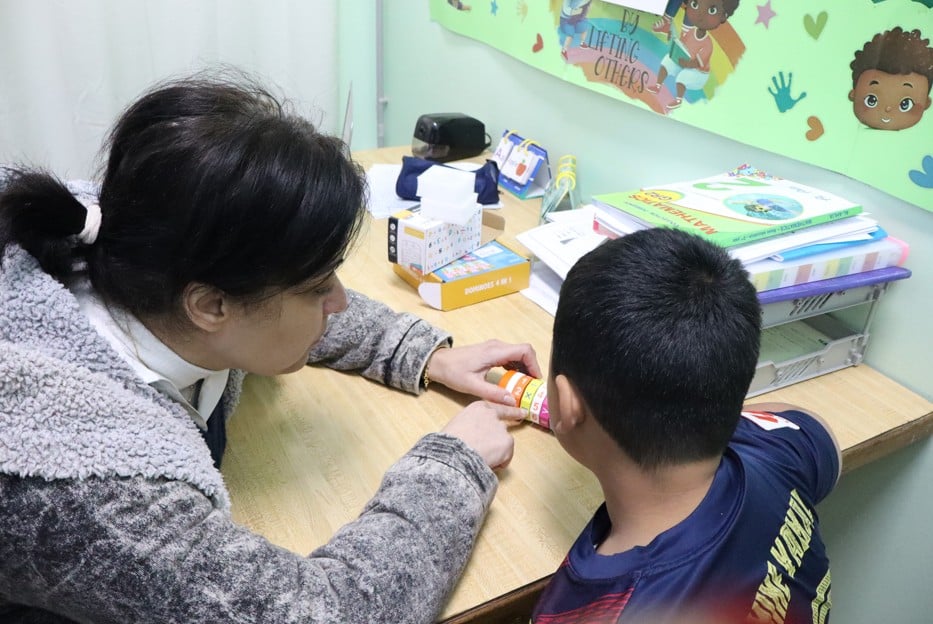
To address this, a key part of Kids Alive’s model is to provide trauma care. This approach can help a child feel empowered to speak about what has happened to them. The model places particular emphasis on gaining trust in adults. If a child goes through a testimony process with a trusted adult – who can explain each step, and help a child to process their feelings before and after each stage, and who is consistently supportive – they are more likely to be able to give admissible evidence.
Creating child-friendly justice systems
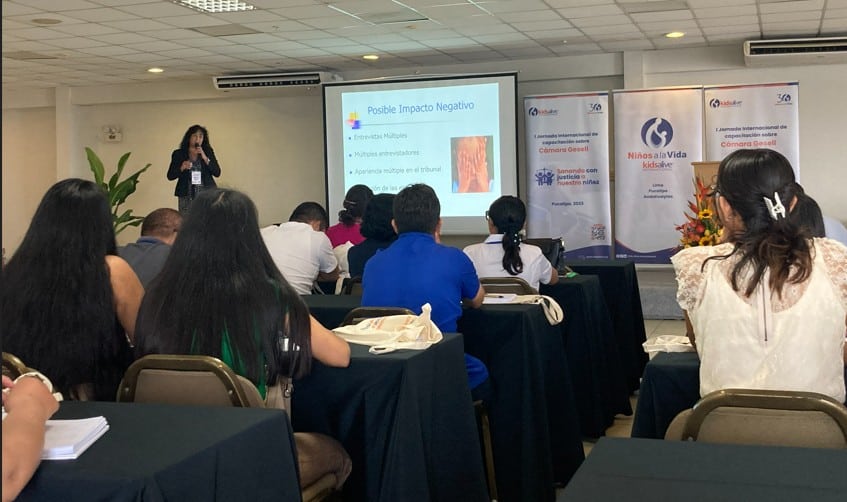
The other part of Kids Alive’s model focuses on working with court systems and key players to create child-friendly and trauma-aware processes, including video testimony facilities.
Kids Alive’s killer insight is that a properly trained counsel in the court – who will protect a child from abusive questions and know how a child wants to tell their story –will result in higher conviction rates and higher sentences.
Indeed, successful conviction rates with Kids Alive cases are above 70%. This is several times higher than those cases where Kids Alive has not been involved.
Governments seem open to judicial reform
Kids Alive has been pleasantly surprised by just how open governments and court authorities are to their model.
This year, it has signed agreements with the governments of Guatemala, Peru, and more recently Zambia, to train officials so they feel empowered to provide child-friendly court environments, training judges and staff in trauma-informed and child-friendly approaches. This July, Kids Alive started piloting the model in Kenya with a similar programme.
It will be fascinating to see the impact of these partnerships.
Turning trauma into triumph
Kids Alive’s vision is a world without child sexual abuse. And for those who have been abused to feel empowered to transform their trauma into triumph and go on to live healthy, happy and fulfilled lives.
Kids Alive is keen to hear from other NGOs and share experiences, especially those working in Kenya, Zambia, Guatemala, Peru, Haiti and Lebanon, and those working with sexually abused children. The organisation is also interested in sharing research findings, including its own recent research on child sexual abuse and support services in Zambia.
Please contact Tim Hunt, Executive Director (UK office), [email protected] and visit www.kidsalive.co.uk for more information.
Related content
Safeguarding and the responsibility to bear witness
Hannah Moysey at Blue State asks: How do we safeguard people without smoothing over the reality of a crisis or losing our responsibility to bear witness?
Justice that Heals: a new model to help address the global issue of child sexual abuse
Over 370 million girls and women globally have been subjected to rape or sexual violence as children and many experience devastating, lifelong consequences. Kids Alive International has established a new model to address this global problem.
First do no harm: what global safeguarding investigators can learn from an international forum on crimes against women
Mercy Corps’ Laura Ragan on why addressing gender-based violence requires collaboration across disciplines, sectors and geographies.

Category
News & views