
Putting people at the heart of change: Andy Burnham’s chance to rewrite Britain’s international development legacy
In 2024 Labour promised a world free from poverty on a liveable planet.
But our new prime minister inherits a UK government navigating a world of profound instability – conflict, climate breakdown, rising inequality, shrinking civic space and a global rollback of rights. People across the UK are feeling the consequences through higher prices, insecure employment, pressure on public services and a growing sense that politics is disconnected from real people’s lives.
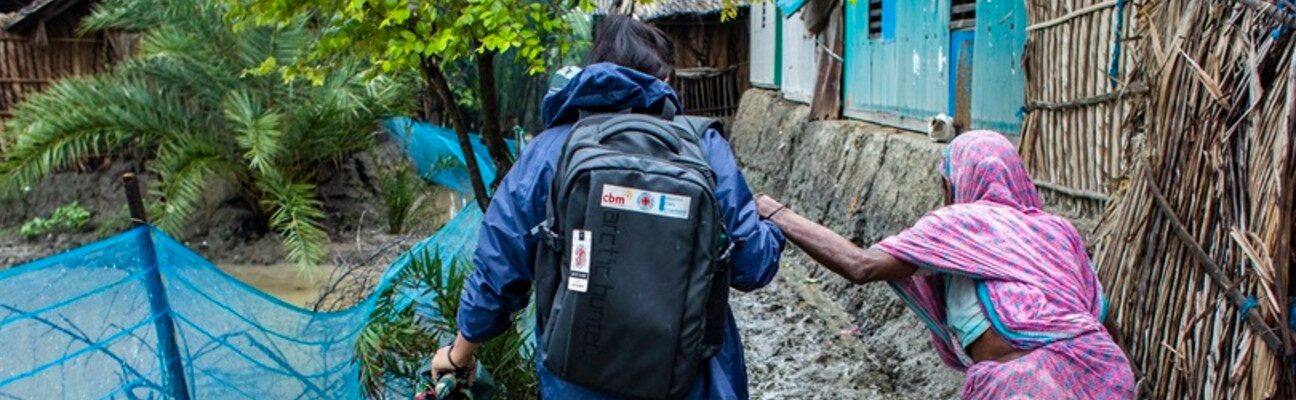
And they are not alone. CBM UK’s partners tell us that those experiencing the sharpest edge of these crises are the world’s most marginalised communities: people with disabilities, women and girls, and communities living in poverty and climate vulnerability.
Broken promises
A new government and a new prime minister bring opportunity for change, locally and globally. The choices Andy Burnham makes now could send a clear and unequivocal message to the UK public that international development is not separate from domestic renewal. It is part of it.
Labour’s 2024 manifesto promised to strengthen UK development work within the FCDO, specifically supporting women and girls, while preventing conflict, tackling unsustainable debt and unlocking climate finance. It committed to restoring development spending to 0.7% of GNI.
Those commitments matter. But after the latest round of UK Aid cuts – up to 90% in some countries over the next three years – they seem to be in tatters.
A more positive choice
The prime minister has the opportunity to reverse this trend, starting by putting inclusion and equality at the centre of the UK’s global role. Decisions on aid, humanitarian response, climate finance and diplomacy must be assessed for their impact on those most marginalised, including people with disabilities. How best to support these communities needs to guide development choices from the start, not added as an afterthought – acknowledging who benefits, who is excluded and the action needed to deliver real and lasting change.
This is not only the right thing to do. It is also the most effective approach. Development that excludes local communities and the people at the heart of them fails to tackle the issues that undermine our security and safety. Climate action that does not include those most at risk will fail to build resilience where it is most needed. Humanitarian response that overlooks accessibility will leave behind those most at risk at moments of greatest danger.
How to create sustainable change
Andy Burnham’s domestic vision offers an important lesson for the UK’s global role. His call to take power out of the centre and place it in the hands of people and places that best understand what is needed speaks directly to what effective international development looks like.
Sustainable change happens when power, resources and decision-making shift closer to communities – especially those most often overlooked. Sustainable change means investing in long-term, accountable relationships with local civil society and community-based organisations. It means listening to people with lived experience when UK-supported interventions are designed, implemented and evaluated.
Framing the world differently
Former foreign secretary Yvette Cooper argued that effective foreign policy is domestic policy. That’s because the instability, economic coercion, technological change and climate pressures facing the world have direct consequences for families in the UK. This cannot be framed as security versus development, or domestic renewal versus international co-operation. Incoming foreign secretary Ed Milliband has also signalled his commitment to tackling the climate and nature crisis alongside international development, recognising that extreme poverty and climate change are shared global challenges which affect security and prosperity in the UK and communities around the world.
Decades of working with affected communities has helped CBM UK see how climate breakdown drives displacement, food insecurity and conflict. Poverty and exclusion undermine economic stability. Weak health systems increase global risks. Debt and unfair global finance mechanisms limit countries’ ability to invest in their own people.
Investment in inclusive development, climate resilience, health, education and humanitarian action will help build stability, reduce crises, support shared prosperity and strengthen the international rules-based order that protects us all. When the UK actively supports inclusive development, it is contributing to a safer, fairer and more resilient world, including for people in the UK.
Disability as a litmus test
Almost 20 years after the UK signed the UN Convention on the Rights of Persons with Disabilities, the aid cuts have sent a damaging signal to communities who were promised that no one would be left behind.
For CBM UK, the test of success is practical. Will people with disabilities have better access to healthcare, education, livelihoods and humanitarian assistance? Will climate finance reach those facing the greatest barriers? Will local organisations have the resources and authority to drive context-appropriate change? Will equality data be used to track who is being reached and who is still excluded?
People with disabilities are not passive recipients of support. They are leaders, innovators and experts in their own lives and communities. Their representative organisations, including Organisations of Persons with Disabilities, must be recognised as decision-makers and equal partners. Without this, previous promises made will never be fulfilled.
A call to make the right choice
The UK’s forthcoming global leadership moments, including its role in the G20, should be used to champion a fairer and more inclusive global system. It needs to make a clear public case for why international cooperation matters as a shared interest. That includes action on debt, climate finance, humanitarian response, civic space and the rights of people with disabilities, including support for formal recognition of a D20.
The UK had built a legacy of development expertise, good civil society relationships and a history of rights-based leadership. But these have been weakened by cuts, uncertainty and perceived retreat from international commitments.
Now, Andy Burnham has an opportunity to connect fairness at home with fairness abroad. His recognition that real change is built from the ground up and his call for “restored hope” in the UK is just as applicable to communities in Bangladesh, Nepal, Kenya or Zimbabwe, to a world in which everyone is afforded the dignity they deserve, the opportunity they desire and has their rights respected. That is how our new prime minister can build a legacy worthy of this moment in time.
Related content

Enabling civil society – time for cake and candles?
Five years ago, the biggest providers of development assistance endorsed a landmark commitment to respect, support and incentivise civil society. Dylan Mathews, CEO of Peace Direct, looks back on the progress and the pitfalls.
Politicians aren’t listening to the public on aid. They’re listening to the media.
New research suggests politicians are mistaking critical media coverage about ODA for public opinion. Correcting this misconception could be a gamechanger, argues Professor Martin Scott and Dr Paul Clist.
What does handing over a programme to government require?
Luke Stannard shares three lessons from Can’t Wait to Learn, a digital learning platform which has been successfully transitioned from an NGO to a government-run initiative.

Category
News & views