

To be a global leader on gender equality, the World Bank must listen to feminist critiques
While aid budgets continue to shrink worldwide, the influence of multilateral development banks (MDBs) in shaping development policy is increasing.
At the same time, wealth inequality continues to rise, while climate change, debt distress and poverty remain urgent challenges. In this context, and amid economically unsustainable geopolitical turmoil, policymakers are increasingly presenting MDBs as a large part of the solution.
The UK is a major shareholder of the World Bank and next year’s G20 president, which gives it the capacity to influence decisions on development finance, sovereign debt, climate finance and reform of the multilateral system in the upcoming years. The UK’s “modern approach” to international development must include using political leverage to interrogate not only how much financing institutions like the World Bank mobilise, but whether the policies they promote are consistent with the development outcomes they claim to work towards, including gender equality.
A feminist perspective on macroeconomic policy is central to the Bretton Woods Project’s (BWP) new report, Surviving the policy pipeline? A critical analysis of the World Bank Group’s approach to gender equality through lending and policy reform. Our research draws on an analysis of 10 sample countries and uses a dedicated benchmarking system, which ranks policies from gender-blind to gender-transformative, to follow gender priorities through the World Bank’s policy pipeline. It finds that the World Bank largely treats gender equality as a specialised area of intervention, while broader economic policies continue to be approached as largely gender-neutral despite extensive evidence of their differentiated impacts on women and girls.
This shows a clear disconnect between the World Bank’s expressed commitments to working on gender equality and the economic model through which it pursues development. Across the countries analysed, 80% retained at least one gender-blind or regressive policy throughout the lending pipeline, but only 40% retained a gender-transformative policy from diagnosis through to lending. These findings mirror concerns long raised by feminist economists and civil society organisations, particularly regarding the gendered impacts of austerity, privatisation and market-led development.
The problem is not a lack of knowledge on gender
The World Bank positions itself as a world-leading expert on gender equality in international development, capable of presenting sophisticated analyses of gender inequality. Through the World Bank’s Gender Strategy 2024–2030, the institution deems gender equality an “urgent imperative” and “essential” for development, and commits to addressing barriers facing women and girls through investments in areas including human capital, economic opportunities and leadership.
The World Bank is capable of presenting sophisticated analyses of gender inequality. Its newest strategy includes three outcome areas: ending gender-based violence and enhancing human capital, expanding and enabling economic opportunities, and engaging women as leaders. Linking these areas are crosscutting themes on fragility, conflict and violence, climate change and resilience, digital transformation, and private sector mobilisation, while the role of care is acknowledged throughout.
Yet, our research reveals a contradiction: while gender considerations are increasingly integrated into diagnostics and strategies, they frequently sit alongside policy reforms centred on fiscal consolidation, privatisation, social protection targeting, public-private partnerships and private sector-led development, which the report, and similar publications, demonstrate can have a negative impact on gender equality. The World Bank has a problem with how gender analysis is reflected in the policy reforms attached to its lending operations.
For years, feminist economists, civil society organisations and social movements have argued that macroeconomic policy is not gender-neutral. Substantial evidence has been published in recent years to highlight the inequality-reproducing nature of conditionalities (often now referred to as prior actions) attached to loans offered by institutions such as the World Bank and the IMF. These conditionalities are heavily reminiscent of the infamous structural adjustment period, despite the institutions’ attempts to distance themselves from that rhetoric. Decisions on taxation, public spending, debt sustainability, social protection, labour markets and private finance – all addressed through lending – shape the resources, services and opportunities available to women and girls.
As evidence of progress on gender equality, the World Bank reports large numbers of women reached, trained, employed or financed through its operations. But such metrics convey relatively little about whether structures of inequality are actually being dismantled through broader macroeconomic policy, whether unpaid care work has been reduced or alleviated, whether public services have become more accessible (through increased fiscal space for borrowing countries), or whether the jobs women enter are decent and in line with ILO standards. Without addressing gender inequality to this degree, transformative change cannot truly be achieved.
Measuring impact on gender equality or manufacturing success?
Our report finds that although the World Bank increasingly recognises the structural drivers of gender inequality, the policy responses attached to lending are often insufficiently ambitious to address them and instead largely focus on economic growth as the indicator of development impact.
Care infrastructure emerged as one of the most consistently retained gender-related priorities. Yet addressing the care burden was primarily framed as a means to increasing women’s labour force participation. Social protection was widely recognised as important, but policy advice overwhelmingly focused on targeting and administrative efficiency rather than universal provision. Climate policies increasingly incorporated gender language yet frequently remained embedded within private-finance-led approaches and market-based development models.
Our report recommends that the World Bank develops mandatory ex-ante and post-hoc distributional impact assessments with a gender lens. We also recommend making lending reforms more transparent and complementing beneficiary metrics with measures that do not simply assume development impact is a natural result of economic growth. Instead, the Bank should align policy with feminist principles of a transformative approach to gender equality. This includes decreased or redistributed care burdens, the realisation and protection of human rights and access to quality public and essential services. All World Bank operations, including lending, must be consistent with its commitments on gender equality, human rights and sustainable development.
If multilateral institutions are to play a leading role in the future of development, they must move past treating gender equality as a specialised policy issue and recognise that macroeconomic policy itself shapes gender equality. The UK’s long-term influence as a key World Bank shareholder, and its upcoming G20 presidency, are opportunities to push for such reforms. Doing so will enable the UK to place its commitments on gender equality and development impact at the centre of multilateral finance.
Related blogs
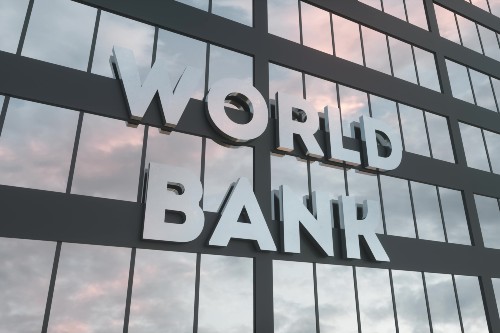
To be a global leader on gender equality, the World Bank must listen to feminist critiques
If the World Bank truly wants to further gender equality it must stop simply equating economic growth with development impact and start ensuring the policy reforms attached to its lending are gender transformative. Amy McShane at Bretton Woods Project writes.
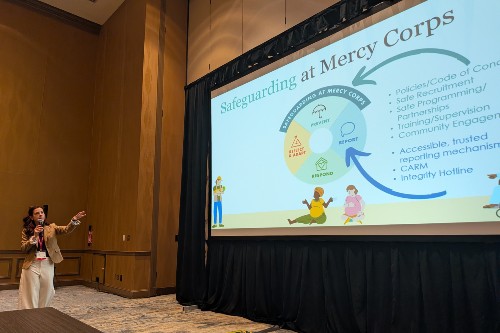
First do no harm: what global safeguarding investigators can learn from an international forum on crimes against women
Mercy Corps’ Laura Ragan on why addressing gender-based violence requires collaboration across disciplines, sectors and geographies.
Why a reparative approach is the only way forward for international development
Claims of locally led development often remain rhetorical unless colonial power and its patriarchal legacy are confronted. This must involve women-led initiatives which use female insight and evidence to drive policy, financial, and systems change.

Category
News & views