
First do no harm: what global safeguarding investigators can learn from an international forum on crimes against women
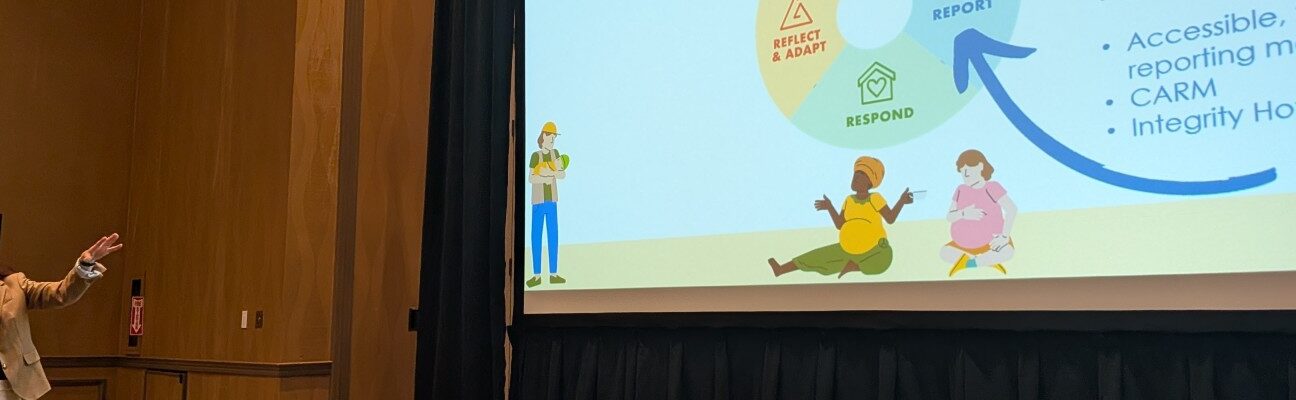
In May, I had the opportunity to present at the 21st annual Conference on Crimes Against Women (CCAW).
This leading international forum brings together law enforcement, legal professionals, medical service providers, advocates and practitioners working to prevent and respond to gender-based violence, including human trafficking and sexual assault.
This marked the first time an international humanitarian organisation like Mercy Corps presented at the conference, creating an important bridge between global safeguarding and domestic justice systems. As safeguarding investigations continues to evolve as a professional field, these spaces for cross-sector learning are critical.
Why this intersection matters
Safeguarding investigators working in international humanitarian and development contexts operate in extraordinarily complex environments shaped by conflict, displacement, power imbalances and limited access to formal justice systems and support services. At the same time, certain professionals in domestic justice are continually advancing practices in areas such as trauma-informed interviewing, survivor support and evidence gathering.
Bringing these two perspectives together ensures we can learn from each other and collectively strengthen responses to abuse and exploitation globally.
Applying survivor-centred, trauma-informed investigations globally
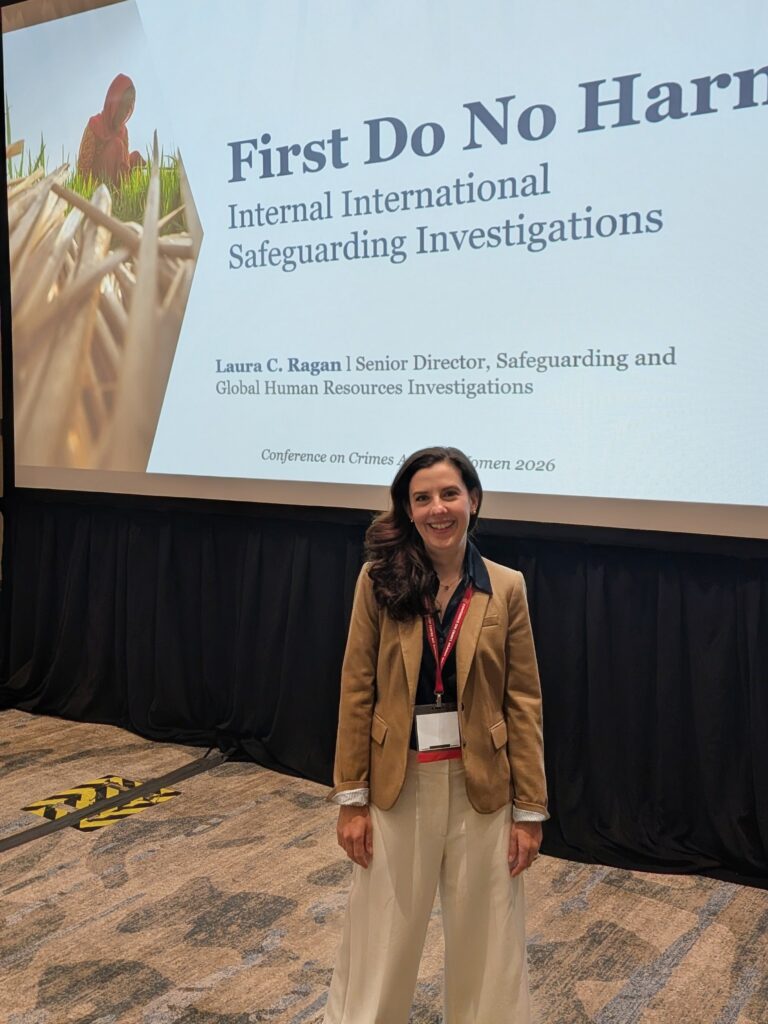
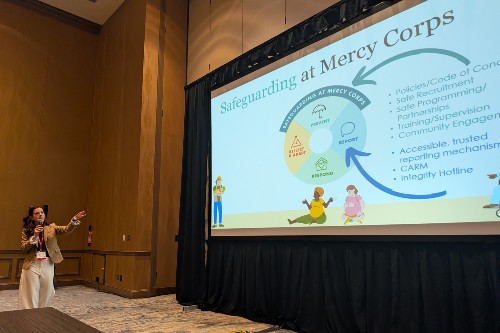
My CCAW session, First Do No Harm: Internal International Safeguarding Investigations, focused on how to conduct survivor-centred, trauma-informed investigations in complex humanitarian and development contexts.
In it, I outlined how safeguarding investigators apply survivor-centred and trauma-informed approaches in diverse global contexts.
We explored several key elements of investigations, including:
- managing reports in complex environments
- risk assessment and mitigation
- coordination with law enforcement (when and where possible)
- interviewing through interpreters, and virtually when needed
- embedding survivor-centred and trauma-informed protocols throughout the investigative process.
While many of these challenges may present differently in humanitarian and development contexts, many resonated with practitioners working domestically. This learning exchange reinforced the key point that survivor-centred and trauma-informed protocols must remain at the centre of all investigative work, regardless of location.
Learning from emerging best practices
One of the most valuable aspects of CCAW is the platform it provides to emerging research, and innovations in trauma-informed interviewing. Safeguarding investigators must seek out access to these evolving methodologies, and forums like CCAW are essential for continuous learning.
In particular, I connected with a team delivering accredited training in Human-Centric Interviewing™, an approach grounded in neuroscience and trauma-informed principles. This protocol emphasises:
- reducing re-traumatisation for all individuals interviewed (survivors, witnesses and subjects)
- improving the quality and reliability of information gathered
- fostering safe, respectful and healing-oriented practices which honour survivors’ dignity and agency.
Building on this connection, my team will be the first in our sector to undertake certification in this approach. This represents an exciting step forward in strengthening investigative practice, and aligning with evidence-based methods the U.S. and other domestic justice sectors are already adopting.
Strengthening cross-sector collaboration
Presenting at CCAW underscored the importance of continued collaboration between sectors. Safeguarding and criminal justice practitioners should focus on operating in partnership whenever possible.
There is significant potential to:
- share tools and best practices across contexts
- align standards of trauma-informed practice
- invest in the continued professionalisation of safeguarding investigations, including through training, accredited certifications and peer learning.
For organisations engaged in safeguarding investigations, seeking opportunities to engage with external expertise, particularly from law enforcement and practitioners responding to gender-based violence using trauma-informed principles within domestic justice systems, can enhance the quality and credibility of our work.
Looking ahead
As safeguarding investigations continues to evolve as a professional field, we should remain open to learning from related sectors and integrating new approaches that strengthen our response to abuse, exploitation and harassment.
Forums like CCAW play a critical role in furthering this learning. They provide training on advanced practices and remind us that addressing gender-based violence requires collaboration across disciplines, sectors and geographies.
For those of us working in international humanitarian and development contexts, the challenge is to translate these insights into our survivor-centred and trauma-informed practices. And by doing so, better support all those affected by gender-based violence, wherever they may be.
Related content

Safeguarding and the responsibility to bear witness
Hannah Moysey at Blue State asks: How do we safeguard people without smoothing over the reality of a crisis or losing our responsibility to bear witness?
Justice that Heals: a new model to help address the global issue of child sexual abuse
Over 370 million girls and women globally have been subjected to rape or sexual violence as children and many experience devastating, lifelong consequences. Kids Alive International has established a new model to address this global problem.
First do no harm: what global safeguarding investigators can learn from an international forum on crimes against women
Mercy Corps’ Laura Ragan on why addressing gender-based violence requires collaboration across disciplines, sectors and geographies.

Category
News & views