
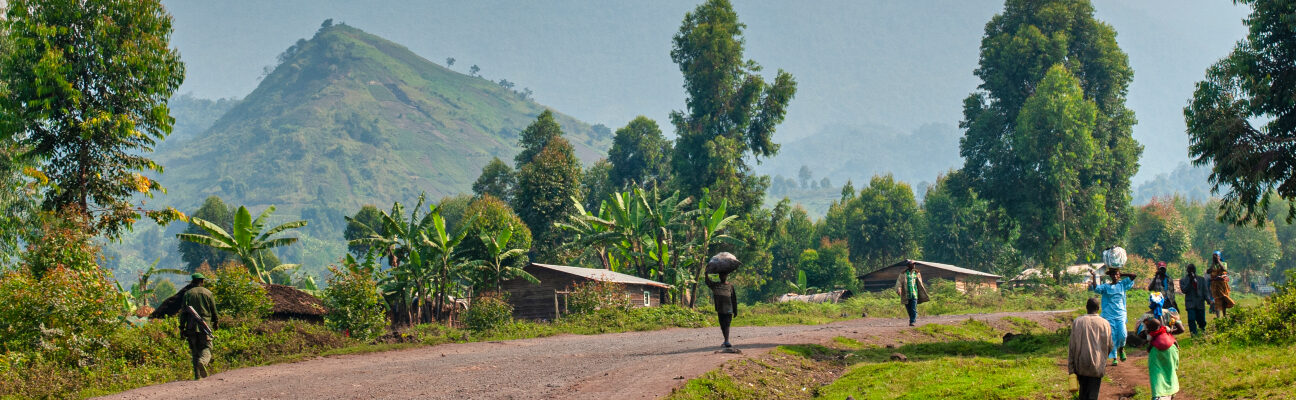
Ebola outbreak in DRC: what is happening, and how Bond members are responding
In May 2026, an outbreak of Ebola was officially confirmed in the northeast of the Democratic Republic of Congo (DRC) – the country’s 17th outbreak of the disease.
This outbreak is caused by the rare Bundibugyo strain of Ebola, which had not been seen for over a decade, and for which there is currently no approved vaccine or treatment, though promising development and testing work is ongoing.
Since the outbreak was declared, there have been 782 confirmed cases of Ebola in DRC up to 13 June, including in the densely populated city of Goma, as well as 19 cases in neighbouring Uganda as of June 14 – with agencies warning that the true scale of the outbreak could be significantly larger.
The World Health Organisation (WHO) has declared the outbreak a public health emergency of international concern, with the WHO Director-General “deeply concerned about the scale and speed of the epidemic“.
As cases continue to rise, there is a high risk of the outbreak spreading beyond Uganda and the DRC, which shares borders with nine other countries. NGOs warn that the next few weeks will be critical to containing the spread of the disease, and preventing further loss of life.
The context
The DRC, particularly eastern DRC where most cases have been identified, is already suffering from complex and overlapping humanitarian crises of armed conflict, displacement and hunger, which complicate the Ebola response and leave communities more vulnerable to disease.
The IRC’s 2026 Emergency Watchlist ranked the DRC among the countries most at risk of humanitarian catastrophe before the current outbreak, and the NRC lists the DRC among the world’s most neglected crises for the tenth year in a row.
A quarter of DRC’s population – approximately 26.5 million people – are experiencing ‘crisis’ or worse levels of famine, and, in Ituri province, the epicentre of the outbreak, over 900,000 people are displaced: with many living in overcrowded and unsanitary conditions where disease can spread more easily. Around 65% of DRC’s population lacks reliable access to clean water.
Ongoing violence and insecurity have hampered humanitarian access, endangered health and humanitarian workers, and made it difficult to trace where the disease may have spread. Marginalised populations, including pregnant women, children and elderly people, are invariably suffering the worst impacts of the crises.
A global response – and a global gap
The 2014-2016 outbreak of Ebola in West Africa, to date the worst iteration of the disease, prompted a large-scale international response that helped to tackle, and ultimately end, the epidemic – and demonstrated the value of global coordination in fighting disease.
However, sweeping global ODA cuts in the years since have weakened global health systems that prepare for, detect, and vaccinate against disease, and worsened the humanitarian context in DRC against which the current outbreak now occurs. The DRC was the African country hardest hit by USAID funding cuts, and the third-most impacted globally, with the delayed detection of this outbreak directly linked to a decline in USAID funding for disease surveillance systems. As a result, essential humanitarian and health programmes across DRC and the region – including those that detect and prevent Ebola and provide shelter and sanitation to communities – have already been forced to close.
Multilateral organisations that coordinate outbreak response, develop vaccines, and build health infrastructure to stop diseases at source have also faced deep cuts: leaving communities around the world, including in the UK, vulnerable to the spread of diseases like Ebola, polio and malaria. This includes the World Health Organisation (WHO), The Global Fund, and the Pandemic Fund – to which the UK government recently announced that it would cease all contributions.
The UK has committed to providing up to £20 million to support the response to the current outbreak. However, this represents just 5% of what the UK provided to the response to the larger outbreak in West Africa in 2014-2016, in which the UK played a key leadership role.
Bond CEO, Romilly Greenhill, has warned that, with a “global health system already under strain, governments including the UK must learn from the 2014-2016 Ebola outbreak – by supporting a well-resourced, coordinated response to prevent the further spread of Ebola, and to protect communities in DRC, Uganda, and around the world.”
How are Bond members responding?
Many of Bond’s members and their partners are actively responding to the outbreak in DRC and Uganda, and increasing preparedness in vulnerable neighbouring countries. Find out more below, and visit their websites for further detail or to donate to Emergency Appeals.
- Concern is responding to the Ebola outbreak in DRC, including providing essential sanitation supplies and installing handwashing stations, emergency latrines, showers and waste disposal pits in at-risk communities and health centres. Local health centres will also be supported to respond through staff training, the provision of essential equipment, and minor refurbishment works based on identified needs.
- ActionAid is currently carrying out a rapid needs assessment in Ituri province and working with local partners to monitor the evolving humanitarian situation and identify urgent community needs.
- Catholic Relief Services is working through trusted local Church partners to strengthen front-line response efforts and support emergency preparedness, and providing protective equipment and infection prevention supplies, installing hand-washing stations and distributing hand sanitizer in churches, schools, health centers and community spaces, and supporting front-line health workers and facilities.
- International Rescue Committee has launched a response in DRC, including the distribution of critical protective equipment. In Uganda, the IRC is working alongside the Ministry of Health at border areas to coordinate response efforts and support infection prevention and control activities, including screening people crossing the border.
- Christian Aid are supporting local response efforts through coordination with national and community-based organisations, international development partners, and local authorities – all working to deliver prevention messages and promote safe health practices in affected communities.
- World Vision is responding in affected areas, including by providing hand washing stations, hygiene kits, and training that can help stop the spread, equipping communities with training and guidance to prevent infection, and helping families facing fear, grief, and trauma get the emotional care they desperately need.
- Tearfund is working with local partners and faith leaders to deliver life-saving hygiene supplies and information about how to stop the virus from spreading. Their Water, Sanitation and Hygiene (WASH) interventions are operating in health centres and at border points to prevent the risk of spreading Ebola.
- Oxfam partners are continuing to provide people with clean water and basic essentials to those affected by the conflict. Oxfam is working to restore critical infrastructure and treat septic tanks to help provide water and sanitation to affected communities.
- CAFOD’s partners on the ground are delivering assistance and personal protective equipment. CAFOD staff are working with partners to reach local communities and their networks.
- Amref is responding in Uganda, South Sudan and Kenya – including awareness-raising, risk communication, and surveillance at community level, providing strategic and technical support and advice to response coordination mechanisms, and pre-positioning PPE as part of preparedness efforts.
- CARE DRC is mobilising an emergency response, targeting 500,000 to 1,000,000 people in affected and high-risk areas, including Ituri Province, key health zones in North Kivu, and selected urban and cross-border locations.
- Trócaire is supporting communities at the epicentre of the crisis to help prevent the spread of Ebola and support families already facing the devastating impacts of conflict and displacement. Funds raised will help support Ebola-affected and crisis-affected communities in DRC and the wider region.
- WFP, through its UN Humanitarian Air Service, has already helped transport hundreds of first responders and humanitarians and dozens of metric tons of critical medical cargo into frontline areas, and is scaling up emergency food and nutrition assistance for over 146,000 people in Ituri Province and communities affected by the Ebola outbreak.
- Mercy Corps‘ emergency teams are ready to provide clean water, handwashing stations, temperature screening, personal protective equipment, community awareness and engagement to counter misinformation and reduce the risk of conflict.
Related content
 Webinar
Radio, AI and community insight: strengthening the Ebola response in DRC
This webinar explored how radio can be incorporated into community listening and humanitarian decision-making. Against the backdrop of the current…
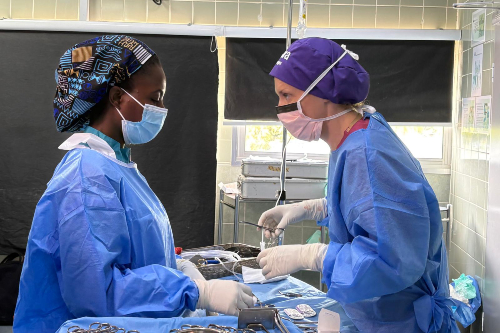
From silos to synergies: how health partnerships can drive integrated emergency care
Tom Bashford at Cambridge Global Health Partnerships explores how well-placed partnerships can drive the systems change needed to increase access to emergency care.
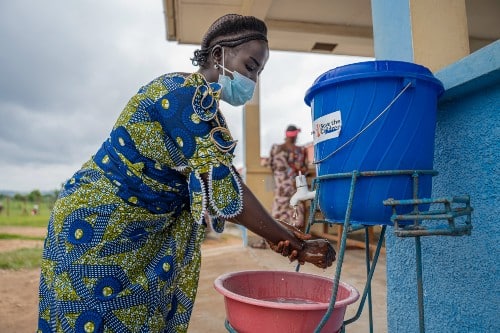
The Bundibugyo wake-up call: why the UK cannot afford to ignore the latest Ebola outbreak
Camila Consolmagno at Save the Children UK and Bea Coates at the International Pandemic Preparedness Secretariat (IPPS) argue why investing in global health security overseas is the only way to guarantee security at home.

Category
News & viewsThemes
Global health