
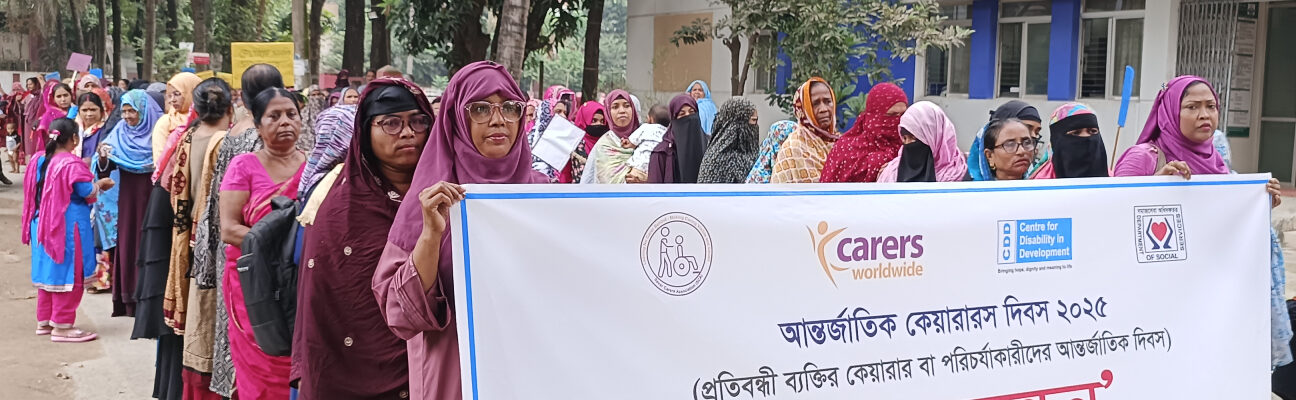
“I want them to give our work the proper respect.”
Across the globe millions of people provide round-the-clock care to family members with disabilities, chronic illness or age-related conditions.
This care is essential, especially where formal social care is limited or non-existent. This care sustains households, communities and local economies. But because this care happens behind closed doors, it is rarely acknowledged in society, public policy, data systems or development agendas. This is especially true in low-and middle-income countries where our work takes place.
Carers Worldwide exists to change that. Every year, the United Nation’s International Day of Care and Support (29 October) gives us a powerful global platform to make unpaid caring visible – to governments, to communities and to the international development sector.
Why visibility matters
For unpaid carers in India, Bangladesh and Nepal, visibility is not symbolic, it is transformative. When carers are seen, they can advocate for their rights. When policymakers understand their realities, they can design better support systems. And when communities recognise their contribution, stigma begins to fall away.
Yet visibility does not happen on its own. It must be created – intentionally, collectively and loudly.
A day when carers step forward
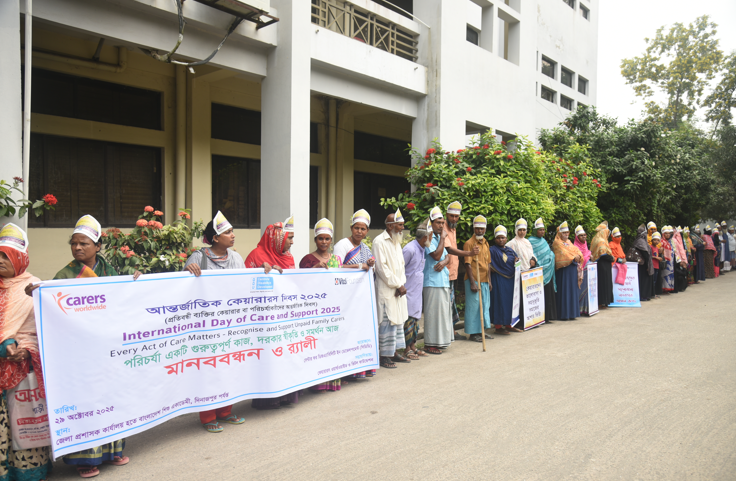
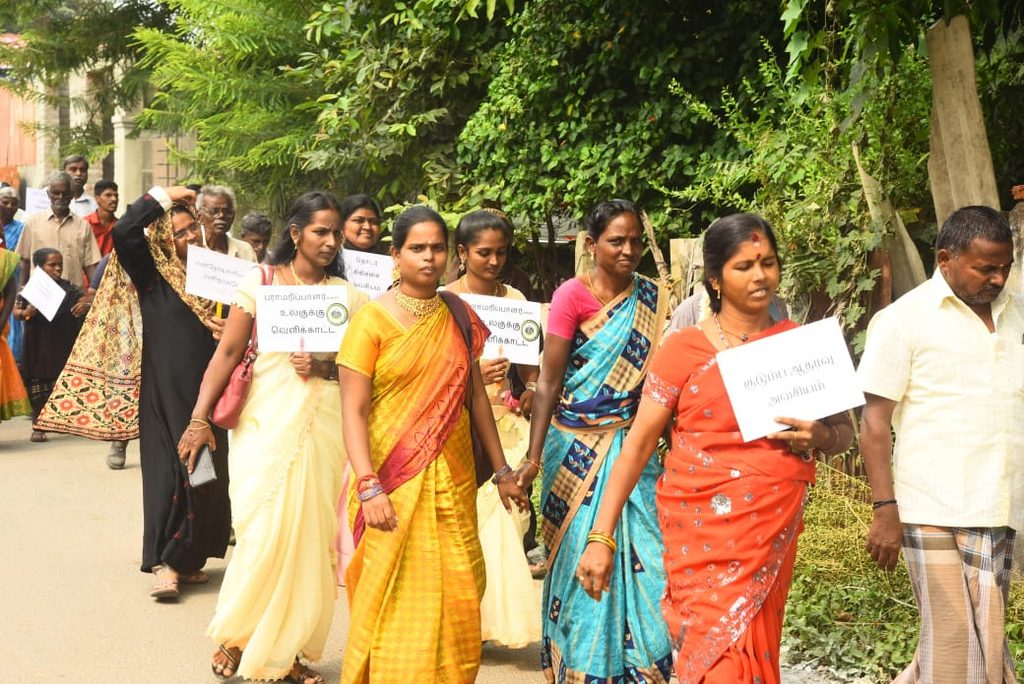
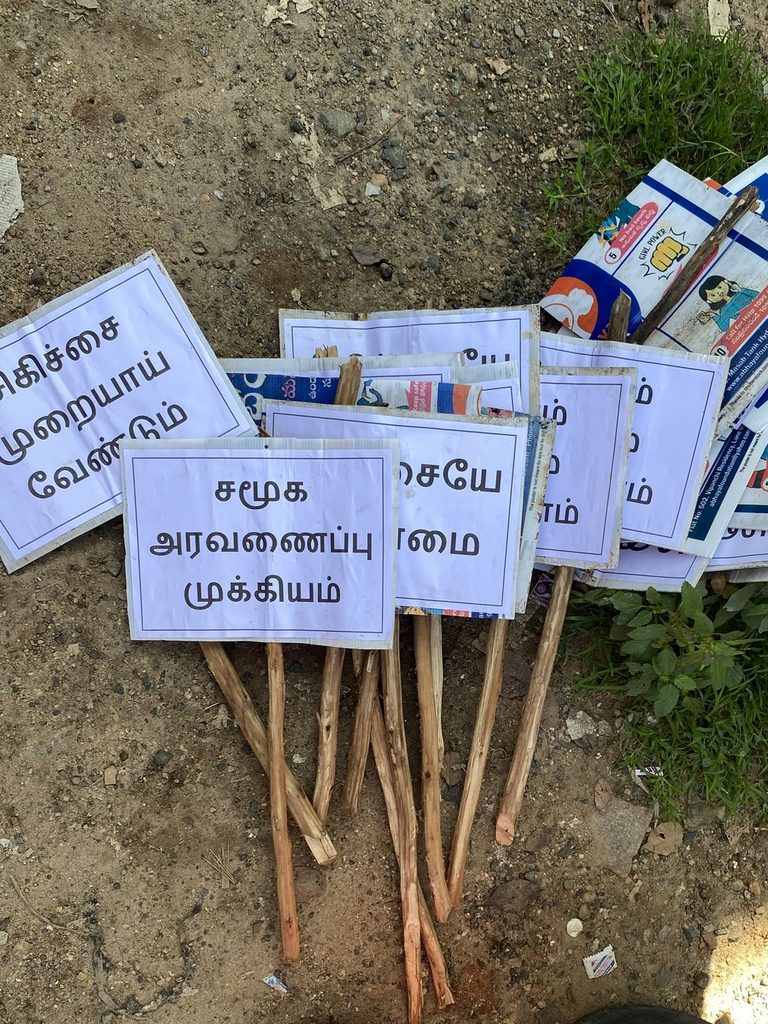
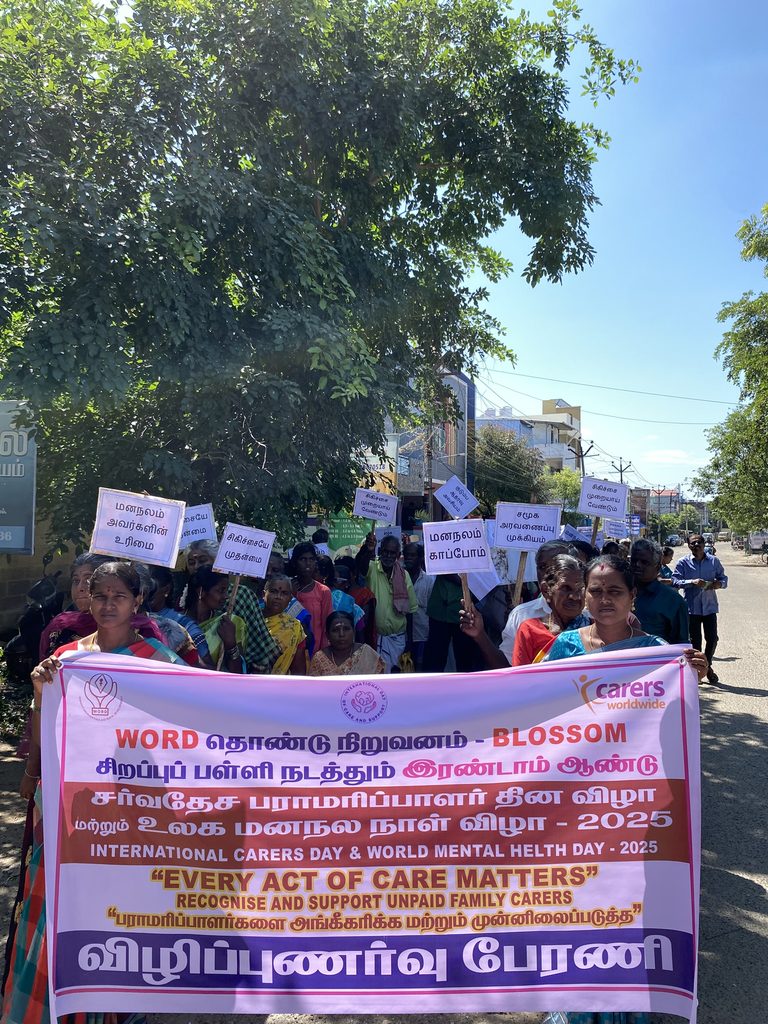
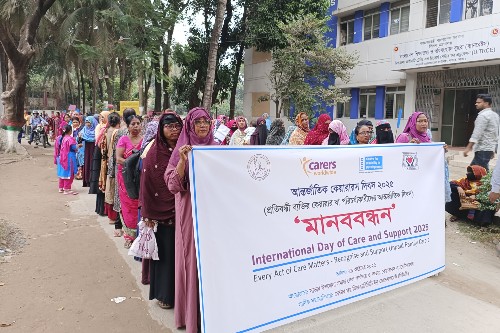
Every year on 29 October, our local partners and the carers they support organise public events to bring unpaid caring out of the shadows. These include rallies and marches, human chains symbolising solidarity, public testimonies from carers about their daily challenges and submissions to local authorities calling for policy change.
These actions are not merely symbolic. They are strategic. They create moments where unpaid carers, who are often isolated and unheard, stand together and speak with a collective voice.
For years, we cared for our families without anyone recognising our work. We are now coming together, raising our voices and asking the government to recognise and support all carers
– says Veda Haveli, an unpaid family carer and shareholder of the Carers Producers Company in Karnataka, India
Building local government ownership
One of the most powerful aspects of the day is how it enables us to bring local government into the conversation.
In India, for example, the southern state of Karnataka has formally recognised the International Day of Care and Support across all 31 districts. In 2025, our local charity partners in Karnataka organised events alongside government officials. The Karnataka government also organised a large event in the state capital, Bengaluru, which saw hundreds of unpaid carers come together to be recognised and appreciated.
This event will take place again this year and the Chief Minister will open proceedings. This kind of government participation is really significant. It helps officials see the scale of unpaid care in their communities and builds political will for change. In Karnataka, this visibility has contributed to major policy shifts, including:
- the introduction and expansion of a Carers Allowance
- the creation of 5,000 new Carers Groups in villages
- Carers Groups being covered under the National Rural Livelihoods Mission, enabling them to access loans of up to 10 lakh rupees (around£7,800).
These are not small wins, they are structural changes that improve carers’ financial security, social inclusion and access to services.
Carer-led advocacy
In Bangladesh, carers in Savar, on the outskirts of the capital Dhaka, organise events and use the day to demand recognition. Their ongoing advocacy has contributed to the introduction of official Carer ID Cards in parts of Dhaka, giving unpaid carers priority access to health services.
Meanwhile, in Dinajpur in the north of Bangladesh, unpaid carers celebrated the day for the first time last year, supported by our partner organisation the Centre for Disability in Development (CDD). Their excitement and determination show how powerful this day can be for communities newly engaging in carer advocacy.
“I’m looking forward to seeing carers’ voices being heard and their mental wellbeing recognised as a priority. I hope this day inspires everyone to care for those who care for others,” Babita Akter, who is part of CDD in Dinajpur, told us.
In Nepal, where political instability limited public gatherings last year, and the recent catastrophic floods are causing challenges this year, carers and our local charity partners use webinars and small meetings to ensure their voices are still heard. This year they are organising a rally and planning a seminar to share findings from the recent carers policy review. Despite the ongoing challenges, their commitment and determination to keep advocating remains.
“Life is not always easy for us as family carers, but when we come together, we feel stronger and more confident to speak up,” says Laxmi Bassnet, an unpaid family carer and secretary of Nawa Agaman Samrakshak Samaj (the Kathmandu Carers Association). “We want people and the government to recognise our work and give us the support we need.”
Why this matters for INGOs and policymakers
1. Unpaid care is a development issue
Unpaid care affects labour force participation, gender equality, health outcomes and poverty reduction. Recognising it is essential for achieving the SDGs.
2. Carers are powerful advocates when given a platform
The events we support demonstrate that carers can articulate their needs clearly and persuasively, but they need safe, visible spaces to do so.
3. Local government engagement is key to sustainable change
Policy shifts in Karnataka and Savar show that when officials witness carers’ realities firsthand, they are more likely to act.
Our commitment: making caring visible, every day
Until we make caring visible, communities and government will not recognise the huge contribution unpaid carers make and provide them with the support they need.
The International Day of Care and Support is one of the most effective tools we have to achieve this visibility.
As Akhtarina, an unpaid family carer from Bangladesh, puts it:
I want everyone to understand that we unpaid carers also feel the need for care and love. I want them to give our work the proper respect.
This year, as carers across South Asia prepare once again to raise their voices, we invite the UK international development community to stand with them. Share their stories. Recognise their contribution. And help ensure that unpaid carers are finally seen, valued and supported.
Making unpaid family carers visible is only the beginning. Real change happens when recognition leads to rights, resources and practical support. This day helps us get closer to making this happen.
Join the Working Groups
Related content
“I want them to give our work the proper respect.”
Anil Patil share how Carers Worldwide uses the International Day of Care and Support to make unpaid carers visible. Why does this matter for INGOs and policymakers?
Working differently: what we learned from prioritising wellbeing and flexibility in the workplace
Jess Gleeson, Head of People and Culture at ADD International, explains how the organisation has rethought the way it works as part of its commitment to wellbeing, flexibility and disability justice — and what it learned from a year of trialling a new approach.

Re-imagining the future of the INGO
Mary Ann Clements, co-lead of ADD, reflects on the changes the organisation has made so that funding can flow more freely and directly to disability justice movements in other countries.

Category
News & views