
From exclusion to opportunity: how disability-inclusive education is transforming adolescent girls’ lives in Zimbabwe
Education transforms lives.
It improves health, increases livelihoods, reduces inequality and enables girls to participate more fully in their communities. Yet millions of children with disabilities continue to face barriers to education, and girls with disabilities are among those most likely to be excluded. Poverty, discrimination, inaccessible schools and a lack of trained teachers in inclusive education mean many never have the opportunity to learn, develop skills or access work.
At CBM UK, inclusive education is one of our core priorities because no child should be denied the chance to fulfil their potential simply because of a disability.
This has been at the heart of the Supporting Adolescent Girls’ Education (SAGE) programme in Zimbabwe. Over almost eight years, SAGE has demonstrated what is possible when governments, development organisations and local communities work together to ensure the most marginalised girls are not left behind.
A partnership built on inclusion
Funded by UK Aid through the Girls’ Education Challenge and FCDO Zimbabwe, SAGE was delivered by a consortium led by Plan International, working alongside CBM, the Open University and the Apostolic Women’s Empowerment Trust.
Together, the partners have supported more than 19,000 out-of-school adolescent girls across Zimbabwe to learn through an accelerated education programme, which includes literacy, numeracy, life skills and rights education. Importantly, the programme also creates pathways into formal education and technical and vocational education training. This helps girls gain knowledge and practical skills which can improve their long-term livelihoods.
Below is a video of Martha, and thanks to the SAGE project, Martha enjoyed learning reading, writing and maths. She told us,
After I graduated from SAGE, I enrolled in a computer programming course – my desire is to get a job as a programmer.
Breaking down barriers for girls with disabilities
Girls with disabilities often face multiple and overlapping barriers to education. Negative attitudes and stigma, inaccessible classrooms, limited or no access to assistive devices and a shortage of teachers trained in inclusive education can prevent girls with disabilities from attending or accessing school.
That’s why disability inclusion was embedded throughout the SAGE programme from the very beginning, with CBM providing technical leadership to ensure girls with disabilities could participate alongside their peers.
This approach helped enable more than 1,100 girls with disabilities to receive tailored support. It included identifying girls who had previously been excluded from education, providing over 700 assistive devices including wheelchairs, hearing aids, spectacles and white canes, producing accessible learning materials and adapting community learning hubs and vocational training centres.
The programme has also invested in teachers and community educators. Inclusive teaching approaches helped educators better support learners with diverse needs while also challenging misconceptions about disability within communities.
Skills for life and for work
One of the programme’s most distinctive features has been its strong focus on helping girls transition into employment.
Alongside foundational education, girls developed vocational skills in areas including tailoring, carpentry and mechanics. This gave them practical routes towards financial independence, and skills for jobs which are traditionally considered “male” occupations.
For many participants, this represented far more than livelihood training. It meant greater confidence, increased independence and the opportunity to contribute economically to their families and communities.
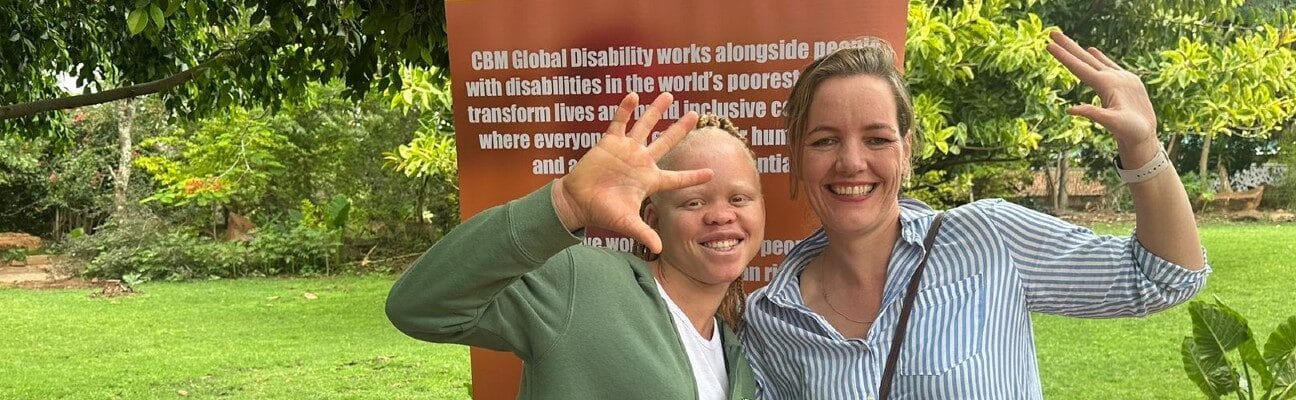
Lydia is one of those young women.
Living with albinism and a visual impairment, Lydia completed the SAGE programme before training as a motor mechanic. She said:
At first, when I started to do motor mechanics, I always wondered what’s inside an engine. But now I understand that it is a dipstick, carburettor and lots of other things. I did my test and did quite well. Now I am already employed and I am starting to work as well. I didn’t formally go to school, but now I’m looking forward to the fact that I can pay school fees for my brother’s high school and I also bought a smartphone for myself.
Lydia’s story illustrates the wider impact of disability-inclusive education: when girls have equitable access to learning and skills, they can shape their own futures.
Strengthening education beyond the project
While SAGE has transformed the lives of individual girls, one of its greatest achievements may be the systems it leaves behind.
Working closely with Zimbabwe’s Ministry of Primary and Secondary Education, the consortium contributed to strengthening the country’s non-formal education policy, helping embed more inclusive approaches within the national education system.
CBM also partnered with the Open University to develop a disability-inclusive teaching toolkit app. This gives educators practical guidance on adapting lessons, improving accessibility and supporting learners with different disabilities.
It is now being rolled out across all 72 districts in Zimbabwe, ensuring the programme’s learning continues to benefit future generations of teachers and learners long after the project has ended. This collaborative work was recognised internationally when the SAGE partnership received a Times Higher Education Award in 2025.
What lasting change looks like
Over nearly eight years, SAGE successfully navigated extraordinary challenges, including Covid-19, a cholera outbreak, prolonged drought and economic instability.
Its success reflects the commitment of local communities, government, educators and consortium partners working together to ensure no girl is excluded from education because of poverty or disability.
For CBM UK, the project has reinforced an important lesson. Disability inclusion is not a specialist add-on; it is fundamental to achieving quality education for all.
As the programme closes, its legacy lives on in stronger education systems, more inclusive teaching practices and thousands of girls who now have the confidence, skills and opportunities to build brighter futures.
Related content
Working differently: what we learned from prioritising wellbeing and flexibility in the workplace
Jess Gleeson, Head of People and Culture at ADD International, explains how the organisation has rethought the way it works as part of its commitment to wellbeing, flexibility and disability justice — and what it learned from a year of trialling a new approach.

Re-imagining the future of the INGO
Mary Ann Clements, co-lead of ADD, reflects on the changes the organisation has made so that funding can flow more freely and directly to disability justice movements in other countries.
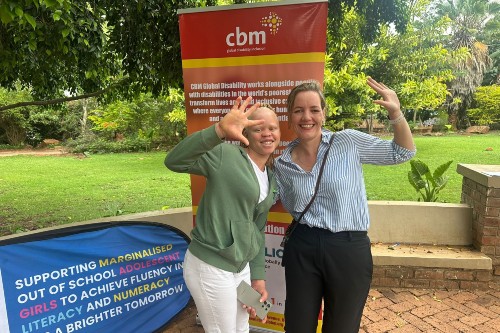
From exclusion to opportunity: how disability-inclusive education is transforming adolescent girls’ lives in Zimbabwe
Through strong partnerships, inclusive teaching and vocational training, an education programme for adolescent girls in Zimbabwe is helping thousands of marginalised girls – including girls with disabilities – build brighter futures.
