

More than a number, less than a priority
Twenty years ago, in Muttur, Sri Lanka, 17 humanitarian workers were killed at their compound.
Every one of them was local staff; people who had chosen to help their own community. Like all humanitarians who die on the job, they were someone’s child, sibling or friend, not a line in a report. Two decades on, no meaningful reckoning has followed. And the kind of attack that took their lives has stopped being an outrage and become the pattern.
This is what World Humanitarian Day now marks: not only the people we have lost, but a system that has learned to mourn them in one month then defund them for the rest of the year.
A record we keep breaking
The numbers are not abstract, and they keep getting worse. In 2024, 383 humanitarian workers were killed. This was the deadliest year ever recorded, up from 293 the year before. More than 1,000 humanitarian workers have been killed in the past three years, the worst period on record, and at least 55 more were killed in the first half of 2026.
Behind almost every death is a local colleague. Around 97% of those killed in 2025 were national staff, attacked while working or at home, in the communities they came from. Since 2000, on average, at least one humanitarian worker has been killed, injured, kidnapped or detained every single day.
Healthcare is under the same assault, with the World Health Organization recording more than 600 attacks on health facilities and workers this year alone. These are not accidents of war. Convoys are hit after their routes are shared for protection. Clearly marked hospitals are bombed. When nothing follows, the message to every armed actor is that humanitarian workers can be killed at no cost.
Concern is not protection
We are not short of promises. In 2024, the UN Security Council passed Resolution 2730, the first to demand accountability for attacks on humanitarians. In 2025, UN member states launched the Declaration on the Protection of Humanitarian Personnel. And almost a decade ago, Resolution 2286 pledged to protect healthcare in conflict. Yet through it all attacks on humanitarian workers have increased.
What is missing is consequence. Investigations stall or never begin. Perpetrators are shielded by their allies. Families receive statements and condolences, not justice.
A commitment that is never enforced is not protection, it is permission. Impunity now shapes the conduct of war more than any resolution does.
Defunding the people we claim to protect
This is where the UK has made its own choice. From 2027, the government is cutting ODA from 0.5% to 0.3% of gross national income, the steepest reduction in the G7, to help pay for a rise in defence spending toward 3% of GDP. At 0.3%, UK aid falls to roughly £9.2bn, its lowest share of national income since 1999, and FCDO programme spending drops by about a third. The minister responsible resigned rather than defend this decision. Of Britain’s top 20 UK aid-recipientrecipient countries, 13 are fragile or conflict-affected –the very places where humanitarian workers are most likely to be killed.
Britain is not alone. The United States dismantled USAID and drove three-quarters of last year’s fall in global aid, a drop the OECD called historic. The effect on safety is direct. This year’s Aid Worker Security Report is subtitled “amid the humanitarian funding collapse”, and it sets out how cuts to security staff, communications and analysis are leaving humanitarians more exposed. The database that records humanitarian worker deaths nearly stopped working when its US funding was pulled. We are cutting the money that keeps humanitaran workers alive, then cutting the means to count them when they die.
What the cuts actually cut
The consequences of global aid cuts are felt in closed clinics, not spreadsheets. For 2026, the UN counts 239 million people in need but plans to reach only 135 million, with 87 million treated as an immediate priority. Tens of millions of people have been written out of the plan because the money is not there.
In Yemen, where I’m from, the nutrition response has been forced to cut its target from 7.8 million people to 2 million, and even that is barely funded. Feeding centres are closing while children are still hungry.
The time for action
Protecting humanitarian workers is not charity or sentiment. It is an obligation under international law and a test of whether that law still means anything. The demands this World Humanitarian Day are straightforward: investigate every attack, impose real consequences on those responsible, guarantee safe access to people in need and fund the delivery that makes all of it possible.
For the UK, that means facing an uncomfortable contradiction. You cannot credibly demand protection for civilians and humanitarian workers while cutting the UK ODA that keeps them alive and reaching for the military budget instead. Reverse the cuts. Use the diplomatic weight you have to make attacks on humanitarians cost something.
The 17 people killed in Muttur are still waiting for justice. As are the more than 1,000 humanitarian workers killed in the past three years.
These people were never numbers. The least we owe them is to stop treating their protection as optional.
Related content
More than a number, less than a priority
At least one humanitarian worker is killed, injured, kidnapped or detained every day. As we mark World Humanitarian Day it is time for the UK government to take meaningful action.
Differences matter: planning and delivering inclusive humanitarian action in contexts where explosive weapons are used
Explosive violence does not create inequalities – it exposes and intensifies them, yet a one-size-fits-all approach to civilians in war zones means many people are not being reached by humanitarian assistance.
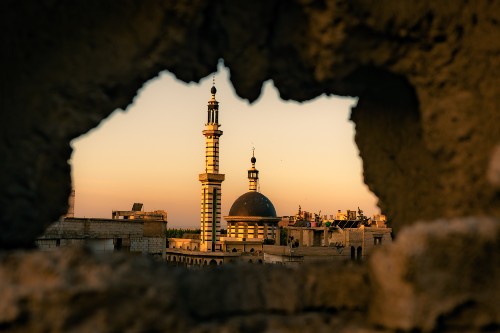
Syria’s chance for a peaceful, inclusive future must not be wasted
In Syria, there is a deep desire for fairness and justice, where all ethnic and religious communities can live together in peace and dignity. The international community, including the UK, must ensure the transitional government realise this vision.

Category
News & viewsThemes
Humanitarian