
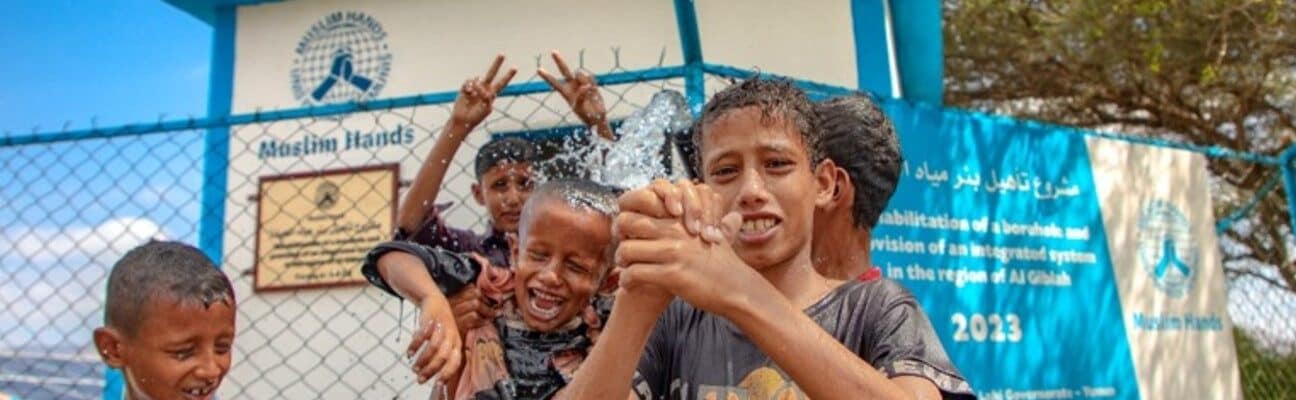
From war to water scarcity: how geopolitical conflict is threatening humanitarian access to water in Yemen
Access to safe water is essential for public health, dignity and stability.
Yet in fragile and conflict-affected countries such as Yemen, water systems are vulnerable not only to local conflict but also to global geopolitical instability.
Humanitarian water, sanitation and hygiene (WASH) services, which provide lifesaving assistance during crises like access to safe water, hygiene promotion and safe sanitation services in addition to climate shocks, depend on interconnected systems of energy, logistics, international trade and donor financing. Boreholes require pumps, pumps require fuel or electricity, and treatment systems rely on imported chemicals, spare parts and technical equipment.
Recent tensions involving Iran, the United States and Israel have increased concerns over the security of strategic shipping routes, such as the Strait of Hormuz and the Red Sea corridor. According to the International Energy Agency, around 20% of globally traded oil passes through the Strait of Hormuz, making the region central to global energy stability. For Yemen, where humanitarian water systems rely heavily on imported fuel and donor support, geopolitical instability like this can directly threaten access to safe water for millions of people.
Yemen’s water crisis
Yemen remains home to one of the world’s most severe humanitarian emergencies. Years of conflict, economic collapse, climate shocks and infrastructure degradation have created chronic water insecurity in a country that was already among the world’s most water-scarce.
According to the UN OCHA Yemen Humanitarian Needs and Response Plan 2026:
- 22.3 million people require humanitarian assistance
- 14.4 million people require WASH support
- 59% of primary health centres lack running water
- more than 350,000 suspected cholera cases and over 1,100 associated deaths happened between March 2024 and November 2025.
As public water systems continue to deteriorate, millions of Yemenis depend on emergency interventions, including water trucking (transporting water via truck), borehole rehabilitation, chlorination systems, sanitation services and hygiene support programmes. These services remain highly dependent on fuel availability, functioning supply chains and predictable donor funding.
Funding gaps and operational constraints
Data from the Yemen WASH Cluster showed that in 2025:
- only 58% of targeted populations received sustained water-system support
- only 21% received sustained sanitation services
- only 39% received hygiene support.
The Yemen WASH response remains critically underfunded. Approximately US $176.9 million was required in 2025, yet only around US $37.4 million was secured.
This funding gap makes it hard for humanitarian organisations to maintain essential services, rehabilitate infrastructure and respond to disease outbreaks. Without reliable financing, even established programmes face disruption.
Water trucking: a fuel-dependent lifeline
In many camps and conflict-affected areas in Yemen, trucked water represents the only reliable source of safe drinking water.
Operational monitoring by the Yemen WASH Cluster estimates that sustaining water trucking for approximately 215,000 internally displaced people across 97 sites requires more than US $92,000 per month.
The challenge is that water trucking is highly vulnerable to fuel price volatility. Any increase in global fuel prices immediately raises transportation and operational costs.
In governorates such as Marib, where communities rely heavily on trucked water, disruptions to fuel supply chains could force humanitarian agencies to reduce coverage or suspend operations altogether.
Geography of vulnerability
Humanitarian mapping by the UN and Yemen WASH Cluster shows that large areas of Yemen fall within severe humanitarian need categories. Governorates such as Taiz, Marib and Al Hudaydah continue to face major service gaps linked to damaged infrastructure, displacement, disease outbreaks and weak public systems.
At the same time, Yemen imports nearly all of its fuel. Any disruption to maritime oil exports or regional shipping routes can rapidly increase fuel costs, directly affecting water pumping, desalination and trucking operations.
Humanitarian programmes also depend heavily on imported materials, such as chlorine, pumps, pipes, generators and spare parts.
Disruptions to Red Sea shipping routes can delay the delivery of essential supplies and interrupt infrastructure maintenance.
Geopolitical crises may also divert donor attention and humanitarian financing away from protracted emergencies such as Yemen, further weakening already underfunded WASH services.
Humanitarian consequences
The humanitarian consequences of prolonged geopolitical instability could be severe. Reduced access to safe water will increase the risk of cholera and acute watery diarrhoea outbreaks, particularly in densely populated displacement settings. The World Health Organization consistently highlights safe water and sanitation as essential to disease prevention.
Women and girls are disproportionately affected by water scarcity. They are often responsible for water collection, and when they have to travel further to get it, their physical burden and exposure to harms like sexual violence increase.
At the same time, a heavy reliance on diesel-powered emergency systems remains financially and environmentally unsustainable.
Building resilient humanitarian water systems
To reduce vulnerability to geopolitical shocks, humanitarian WASH strategies must prioritise resilience and sustainability.
Key priorities include:
- Expanding solar-powered water systems to reduce diesel dependency
- Strengthening local water institutions and technical capacity
- Pre-positioning critical supplies, such as chlorine, pumps and spare parts
- Increasing flexible, multi-year humanitarian funding mechanisms
- Investing in climate-resilient and locally-managed water infrastructure
Several humanitarian organisations, including Muslim Hands UK, have increasingly integrated renewable energy solutions into water supply programmes to improve long-term sustainability and reduce operational costs.
Recognising the link between energy security, geopolitical conflict and humanitarian water access
Humanitarian monitoring data clearly shows that the WASH sector is already operating under severe strain.
Addressing this challenge requires more than emergency response alone. Governments, donors, humanitarian agencies and development actors must recognise the growing connection between energy security, geopolitical conflict and humanitarian water access.
Greater investment in renewable-energy-powered water systems, resilient infrastructure, local technical capacity and predictable humanitarian financing is essential to protect communities experiencing water shortages and poor sanitation from future shocks.
Ensuring access to safe water in fragile contexts such as Yemen is not only a humanitarian responsibility. It must become a global strategic priority, linked as it is to stability, public health and human dignity.
Related content
From war to water scarcity: how geopolitical conflict is threatening humanitarian access to water in Yemen
Dr Mahmoud Shatat shares the implications of the Middle East conflict on the global WASH response. How can we ensure access to safe water in fragile contexts?

The bitter truth about chocolate: tackling water injustice in cocoa supply chains
New evidence reveals a hidden injustice at the heart of the global chocolate industry. Dr Nick Hepworth at Water Witness argues there is a clear solution in this new blog.
Turning learning into practice: insights from the Muslim Hands’ Annual WASH Forum
As the water, sanitation and hygiene (WASH) sector faces increasing pressure to do more with less, platforms like the Muslim Hands Annual WASH Forum offer vital spaces for peer-to-peer learning, operational improvement and long-term resilience.

Category
News & viewsThemes
WASH