

From silos to synergies: how health partnerships can drive integrated emergency care
Everyday millions of people face life-threatening conditions due to injuries, childbirth complications, heart attacks, severe infections and strokes.
In these conditions, timely care can mean the difference between life and death.
In recent years, public health emergencies, such as the COVID-19 pandemic, Ebola outbreaks, climate-change related disasters and political conflicts, have brought the importance of emergency care into sharp focus. Yet for far too many people, particularly in under-resourced healthcare systems, access to safe, timely and affordable acute care remains out of reach. Indeed, emergency medical conditions contribute to more than half of all years of life lost across the world.
Turning World Health Assembly momentum into system change
This is why the recent momentum at the World Health Assembly (WHA) around advancing integrated emergency, critical and operative care (ECO) services as a component of universal health coverage and protection from public health emergencies feels so significant. The “ECOsystem” strategy marks a fundamental shift, seeking to place ECO services at the heart of health systems with strong communication and referral linkages between communities, ambulances, clinics and hospitals to connect people to care when they need it.
Crucially, it also recognises the importance of investing in the acute care workforce. Strengthening workforce planning and capacity is identified as a key priority, with a focus on developing specialist training pathways, and ensuring that health workers are equipped with the training and technical support they need to deliver safe, high-quality care.
This takes more than just political will. Speaking at the WFSA ACAN side event at WHO Headquarters, Professor Mohamed Yakub Janabi, the Regional Director for WHO’s Africa Regional Office, put it bluntly:
Policies do not save lives. Strategies do not save lives. Systems do.
The global challenge is that developing these systems can feel overwhelming. Traditional models of healthcare development are based around targeted funding to combat specific diseases, such as HIV or malaria. This oftens leads to fragmented, short-terms gains rather than the integrated resilient health systems needed for sustainable, long-term impact.
This is where the health partnership model, which the UK has long supported and benefitted from, can offer valuable lessons.
Partnerships as a practical route to emergency system strengthening
Before joining discussions at the WHA, I had the privilege of spending a week in Ghana with friends and colleagues from Korle Bu Teaching Hospital and the University of Ghana, along with a team from the University of Cambridge, Addenbrooke’s and the Lister Hospitals, and Cambridge Global Health Partnerships (CGHP). Our partnership brings together a multiprofessional team to strengthen trauma and vascular surgery in Korle Bu as part of the Improving Perioperative, Trauma & Interventional Vascular Emergency Systems (IMPERATIVES) project, supported by the Association of Anaesthetists. This is an area of urgent unmet need in Ghana, which currently employs just two vascular surgeons for a population of 35 million people.
Ghana, like many African countries, trains exceptional medical professionals. However, systemic underfunding means many seek employment outside of the country, leaving health systems weakened.
This is not always one-way. Passionate doctors such as Joachim Amoako, Consultant Vascular Surgeon at Korle Bu, is determined to use his experiences working in the NHS to drive change for Ghanaians. He is pioneering Korle Bu’s first vascular surgery unit, drawing on international friendships such as ours to help build a research base, develop multidisciplinary team working and strengthen emergency surgical systems. This allows the benefits to extend not only to those patients needing vascular or trauma surgery, but supports emergency, critical and operative care across the hospital.
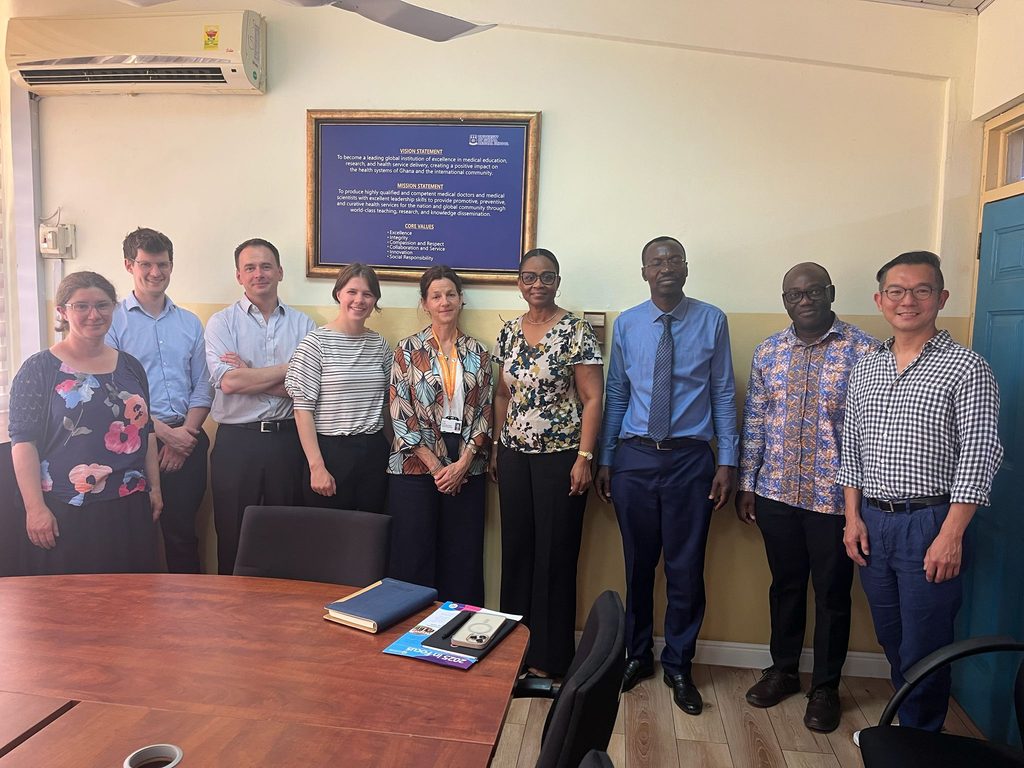
This work is supported by the International Health Systems Group from the University of Cambridge, which employs systems engineering methods to embed resilience and equity within developing healthcare systems.
By working with deeply committed individuals, health partnerships allow efforts within a single institution, with a defined clinical problem, to strengthen systems that serve a much wider patient population. Crucially, this model is not context-dependent. I have worked with CGHP on similar partnerships in Myanmar and Uganda over the past decade. Both have delivered improvements in care that dwarf those achievable by simple targeted interventions.
Applying the ECOsystem framework to unlock synergies
As the global ECOsystem strategy moves from endorsement to implementation, policymakers, funders and delivery partners must resist the temptation to “deliver” an ECOsystem as this runs the risk of quickly becoming unfocused and without clinical ownership.
Instead, the framework provides a clear mandate for focussed health partnerships to look for synergies across the health system, working with others to deliver cross-cutting impact. This requires a paradigm shift: embedding systems thinking into clinical service design, and worrying less about linear outcomes and more about holistic change.
This new focus is not without challenge. Systems are complex, and partnerships need to be mindful that change can cause harm as well as benefit.
While clinical ownership is essential, a range of academic and operational perspectives are needed to understand the breadth of system strengthening required, whether technical, social or political.
In my experience, health partnerships thrive on friendship and clinical engagement. While surgeons like Joachim and I may look for widespread system changes, we retain our focus on the single surgical patient we care for in the operating theatre. The challenge for us is to make sure that what helps us, helps others.
Related content
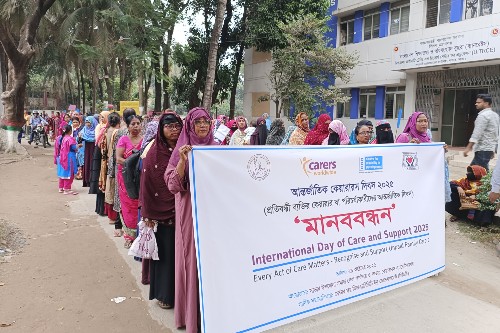
“I want them to give our work the proper respect.”
Anil Patil share how Carers Worldwide uses the International Day of Care and Support to make unpaid carers visible. Why does this matter for INGOs and policymakers?
 Webinar
Radio, AI and community insight: strengthening the Ebola response in DRC
This webinar explored how radio can be incorporated into community listening and humanitarian decision-making. Against the backdrop of the current…
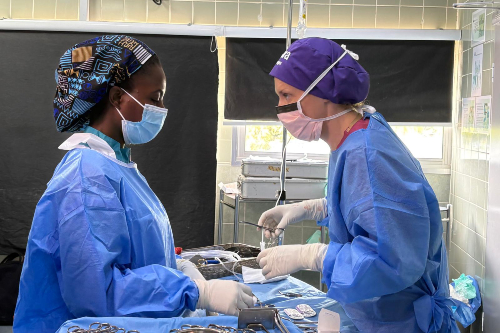
From silos to synergies: how health partnerships can drive integrated emergency care
Tom Bashford at Cambridge Global Health Partnerships explores how well-placed partnerships can drive the systems change needed to increase access to emergency care.

Category
News & viewsThemes
Global health