
How INTERPOL and the aid sector are working together to tackle sexual exploitation, abuse and harassment
In October 2018 the concept of INTERPOL’s Project Soteria was presented to the London Safeguarding Summit.
Soteria was described as an ambitious attempt to address one of the aid sector’s most difficult and uncomfortable challenges: how to stop perpetrators of sexual exploitation, abuse and harassment (SEAH) from being hired and moving around the sector.
At that point it was a long-term ambition, but discussions highlighted the contribution that a global law enforcement organisation like INTERPOL could make to safeguarding within a sector grounded in humanitarian principles, community trust and survivor-centred approaches.
In 2021, after preliminary design work (which had been delayed by COVID) was completed, Project Soteria formally launched.
A new solution to an old safeguarding challenge
The challenges that inspired Soteria’s creation remain relevant today. Aid organisations continue to operate in fragile environments, often under pressure to recruit and deploy staff quickly. Perpetrators continue to exploit the weaknesses inherent in this approach alongside jurisdictional loopholes, inconsistent SEAH reporting systems, poor vetting, weak recruitment mechanisms and gaps in cross-border information sharing.
The CHS Alliance’s SEAH Harmonised Reporting Scheme records over 1,000 SEAH incidents in three years. Yet this is widely acknowledged to represent only a fraction of actual prevalence. In the most recent reporting period, outsourced personnel accounted for 44% of alleged perpetrators in community-facing incidents. Just over half of cases were investigated and 35% substantiated, highlighting persistent challenges in evidence collection, delayed reporting and limited investigation capacity.
Safeguarding failures are deeply damaging, not only to survivors but also to the credibility of organisations and the trust placed in the international aid sector.
Sharing data across borders to identify repeat offenders
Since 2021 Project Soteria has evolved from concept to operational reality. A key development has been the introduction of two mechanisms: the Threat Identification Scheme, which enables participating organisations to request security checks through INTERPOL systems, and the Substantiated Misconduct Referral Mechanism, which enables substantiated misconduct data to be shared to identify repeat offenders.
Where a threat is identified, INTERPOL will notify the relevant national law enforcement agencies. Where applicable, these agencies will share the outcome with the aid sector organisation. This, in turn, helps to bridge the gap between law enforcement and the aid sector.
Significantly, Hope for Justice became the first international NGO to implement security checks under Project Soteria. For many working in safeguarding, this marked an important milestone and clearly demonstrates that meaningful cooperation between law enforcement and the aid sector is possible.
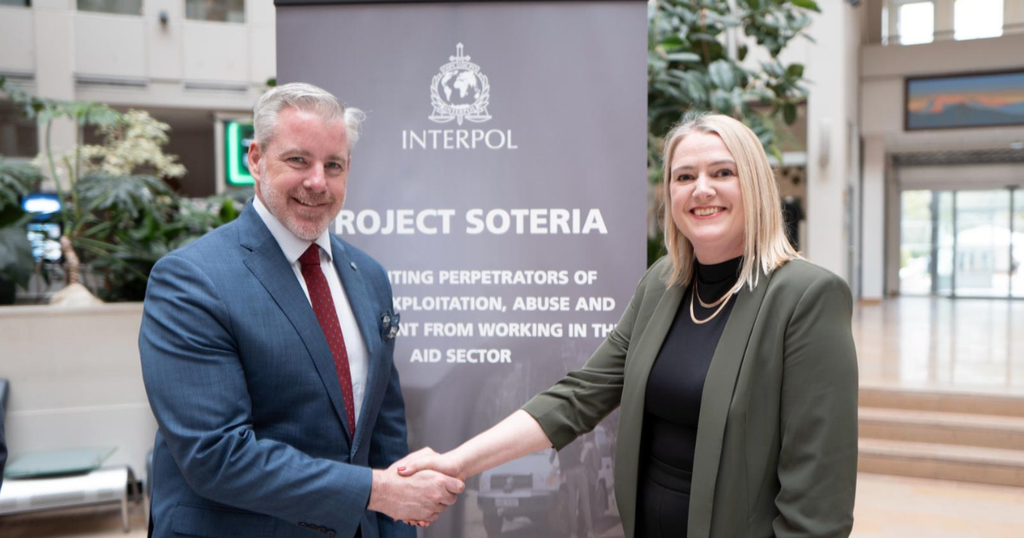
Project Soteria has now signed cooperation agreements with COWA (Uganda), ECPAT International (Thailand), Organization for Sustainable Development Africa (Kenya), Candle of Hope Foundation (Kenya), Community Fight Against GBV and HIV/AIDS (Kenya), Emerging Genderplus Outreach Team (Nigeria), Hope Initiative for Women Africa (Nigeria), Nglude Global Foundation (Nigeria) ,Global Safeguarding (UK), Buikwe Touch (Uganda), WaterAid (UK) and ROMME Caring Tanzania ( Tanzania). A further 15 organisations are currently in the process of formalising cooperation agreements, signalling increasing momentum behind efforts to strengthen safeguarding through international collaboration.
What began as a cautious conversation is gradually evolving into a wider international network focused on prevention, and accountability.
A bridge between law enforcement and the aid sector
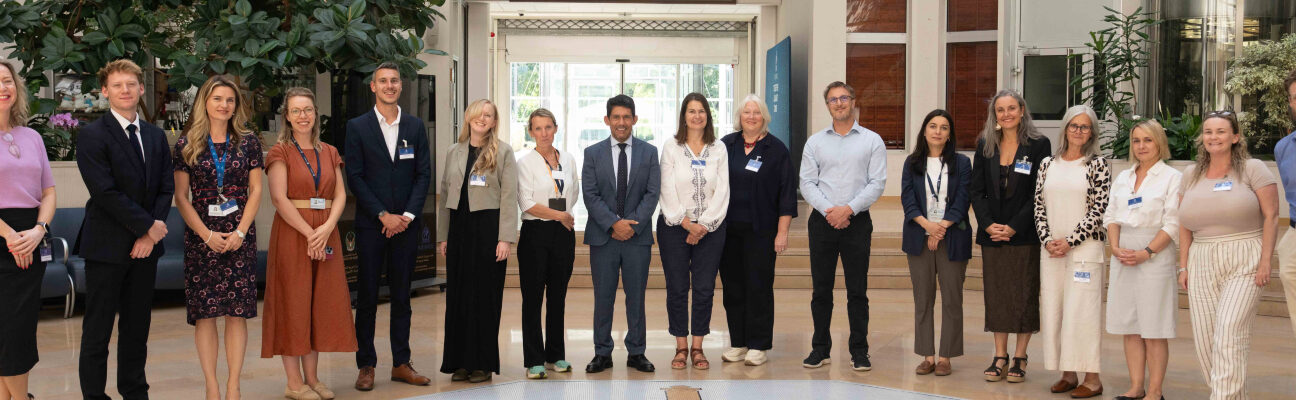
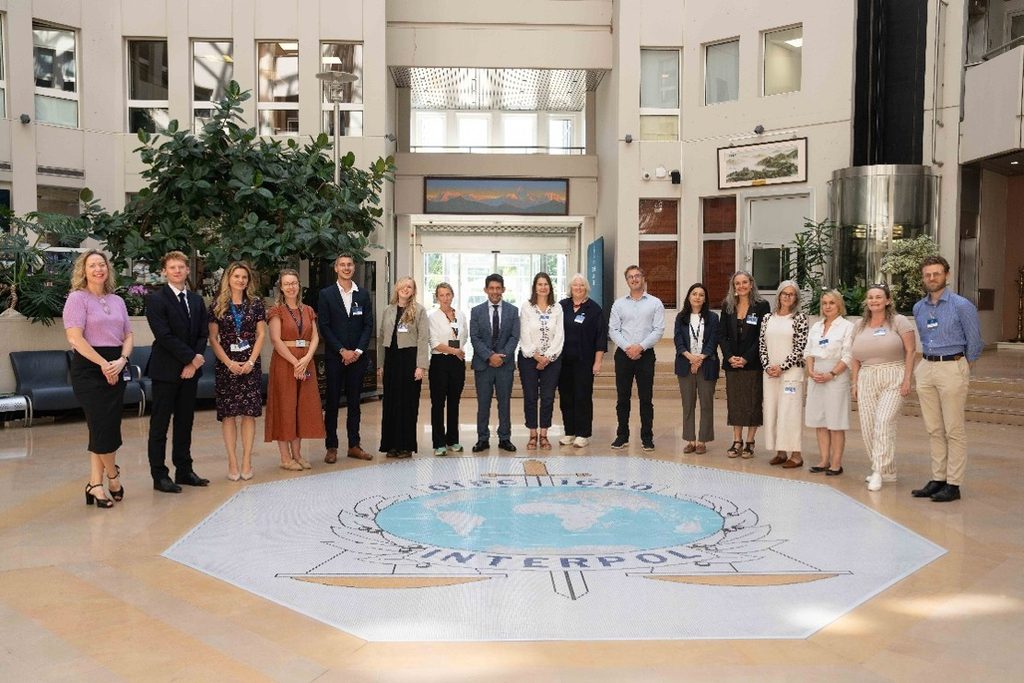
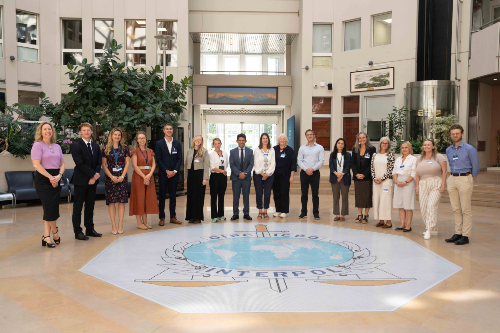
On 2 July 2026, senior safeguarding figures from a group of leading aid organisations visited the INTERPOL General Secretariat in Lyon for a one-day Project Soteria familiarisation visit. This offered a practical and open look at how Soteria operates, how data is managed safely and proportionately and how the security checks work in practice. The aim was to address concerns directly, build trust and lay the groundwork for formal cooperation.
From the beginning, one of the most significant concerns raised by safeguarding experts was that deterrence mechanisms would never be enough without safer and stronger investigative and survivor-response capacity in law enforcement. Alongside its safeguarding initiatives, the project played a role in strengthening the ability of law enforcement agencies to investigate sexual and gender-based violence (SGBV) using victim-centred and “do no harm” approaches.
(National Police College Main Campus, Kiganjo, Kenya. During a two-day sensitization on INTERPOL policing capabilities, aimed at strengthening policing through international cooperation.)
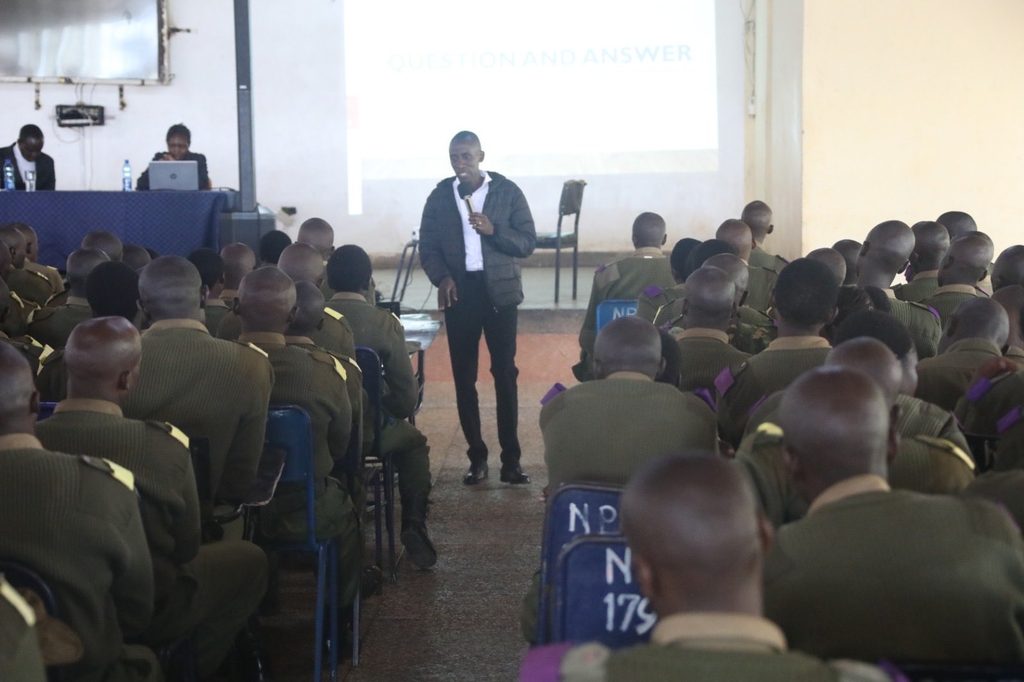
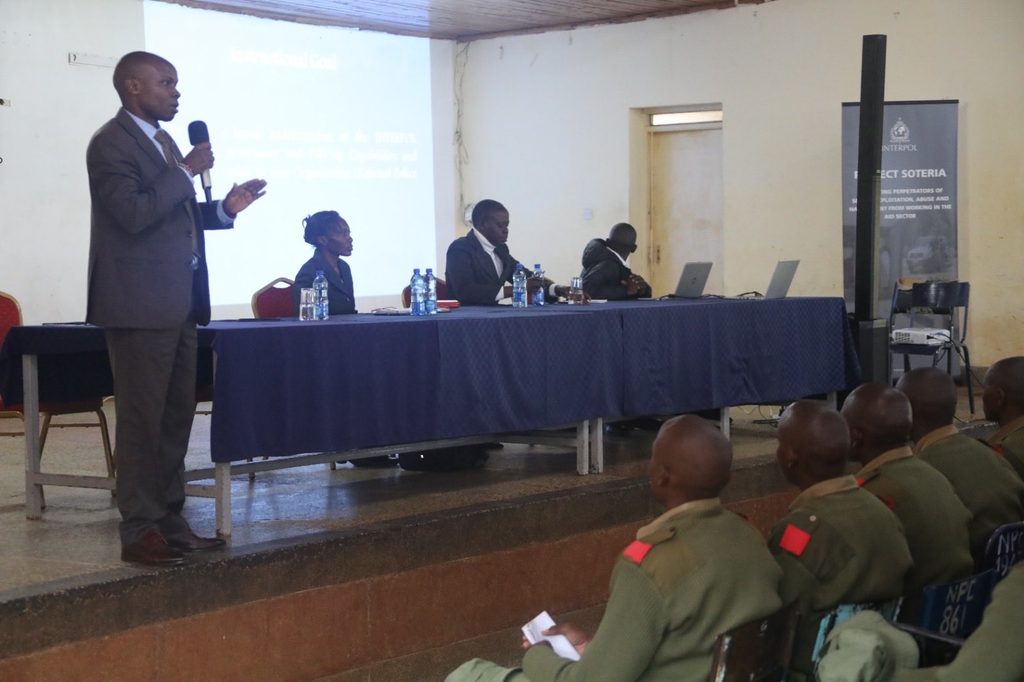
In countries including Bangladesh, Kenya, Nepal, Philippines, Tanzania and Uganda, police officers and investigators have received training on how to apply INTERPOL tools specifically for SGBV investigations. Kenya’s recent launch of the INTERPOL Policing Capabilities Foundation Course, now embedded in the national police curriculum, marks an important shift from short-term training initiatives toward sustainable policing solutions. In August 2026, more than 5,500 newly recruited police officers were introduced to the course, demonstrating its potential to strengthen policing capabilities at scale and over the long term.
This matters because safeguarding cannot exist in silos from the justice systems around it. Survivors often do not distinguish between “aid-sector abuse” and other forms of violence. They experience barriers to reporting, fear of retaliation, imbalance in power dynamics and challenges accessing justice, regardless of who the perpetrator is.
A few years ago, many aid organisations were uncomfortable involving law enforcement in safeguarding discussions. That hesitation persists, but the conversation is evolving. Concerns around breaching safeguards, survivor confidentiality, criminalisation, human rights abuses, data protection leaks and reputational risk remain valid and continue to require careful attention. However, Soteria demonstrates that cooperation between law enforcement and the aid sector can be grounded in human rights standards and strong data protection safeguards.
Shifting from reactive to preventative safeguarding
Perpetrators of abuse exploit the gaps between organisations, countries, systems and mandates. They depend on the assumption that no one is connecting the dots across borders. In those gaps, they believe they are invisible and untouchable.
At its core, Project Soteria brings together NGOs, multilateral organizations, governments and law enforcement agencies to close these gaps gradually but systematically.
But there is still a long way to go.
Many countries still lack accessible SEAH reporting systems. Prevention of SEAH requires sustained investment, political will and cultural change which cannot be achieved through one project alone.
But Project Soteria represents something tangible that did not exist a few years ago: a growing international system attempting to connect safeguarding, international policing, and accountability in a coordinated way.
We know this will not close the gaps overnight. But the conversation is no longer about whether change is possible. It is about how we continue building a system that better protects people in vulnerable situations. A system that can function across borders, be trusted by the aid sector and contribute to real accountability.
We continue to invite organisations worldwide involved in aid programmes to participate. Joining Project Soteria offers a practical tool to strengthen recruitment safeguards and demonstrate a visible commitment to accountability. Fundamentally, this helps to protect the people an organisation serves, and its own institutional credibility. And for the sector as a whole, the broader the participation, the stronger the deterrent.
Find further information about Project Soteria here.
Related content
How INTERPOL and the aid sector are working together to tackle sexual exploitation, abuse and harassment
A growing international system is connecting safeguarding, international policing, and accountability. Elizabeth Wright at Project Soteria – INTERPOL share’s how the initiative moved from concept to operational reality.
Safeguarding and the responsibility to bear witness
Hannah Moysey at Blue State asks: How do we safeguard people without smoothing over the reality of a crisis or losing our responsibility to bear witness?
Justice that Heals: a new model to help address the global issue of child sexual abuse
Over 370 million girls and women globally have been subjected to rape or sexual violence as children and many experience devastating, lifelong consequences. Kids Alive International has established a new model to address this global problem.

Category
News & viewsThemes
Safeguarding