
Localisation: moving from transactional structures to trust-based collaboration
The Joint Initiative for Strategic Religious Action (JISRA) was a partnership of 50 civil society organisations in Ethiopia, Indonesia, Iraq, Kenya, Mali, Nigeria and Uganda, supported by lobby and advocacy efforts in Europe and the USA.
This interreligious partnership implemented a five-year programme (2021–2025) in collaboration with the Dutch Ministry of Foreign Affairs to advance peaceful and just societies in which all could enjoy freedom of religion and belief (FoRB), with a special focus on shifting power to local actors, especially women and young people. Tearfund implemented JISRA through 15 local partners, split across Ethiopia, Iraq, Mali and Nigeria.
During JISRA’s design phase, the consortium worked with in-country partners and stakeholders to co-create a programme that embedded decision-making power at the right levels. Transparent, inclusive and somewhat complex governance structures were established after award of the grant. There was an expectation that these structures would simply begin working on day one. However, the reality proved more complex.
Trust is the basis of power shifting – and it must be earned, not assumed
Although many stakeholders had already collaborated to some extent during the co-creation phase, after the grant was awarded changes in stakeholders were unavoidable. Especially in sensitive post-conflict environments, the reality of working on a joint five-year project addressing sensitive issues like FoRB and inter-faith relationships meant that trust needed to be built to a much greater extent.
Governance structures initially functioned as transactional fora and struggled with engagement, particularly the integration of women and young people.
Local partners and stakeholders felt like they were lacking detailed structures and rules for decision making, which in traditional grants there are often plenty of. But JISRA purposefully limited such rules to enable local partners and stakeholders to design their own decision-making frameworks and take full ownership. Initially, this caused delays and confusion, and a plethora of issues were escalated to the global consortium or more senior levels of organisations to make decisions.
However, as trust grew, things changed. As JISRA’s final evaluation notes:
Over time, processes simplified, decentralised, and strengthened Southern leadership. Trust and collaboration improved, though decision-making remained partly centralised and administrative demands continued to challenge full equitable participation.
This process required ample patience from the consortium partners and the donor, whose willingness to make programmatic and financial adaptations was crucial to power shifting, and reaching substantial impact.
The Subsidiarity Principle: elevating local decision-makers
As local stakeholders stepped into their roles as primary decision-makers, the guiding principle of subsidiarity – that decisions are made as close to the people affected by the issues as possible – resulted in responsive programming and increased impact.
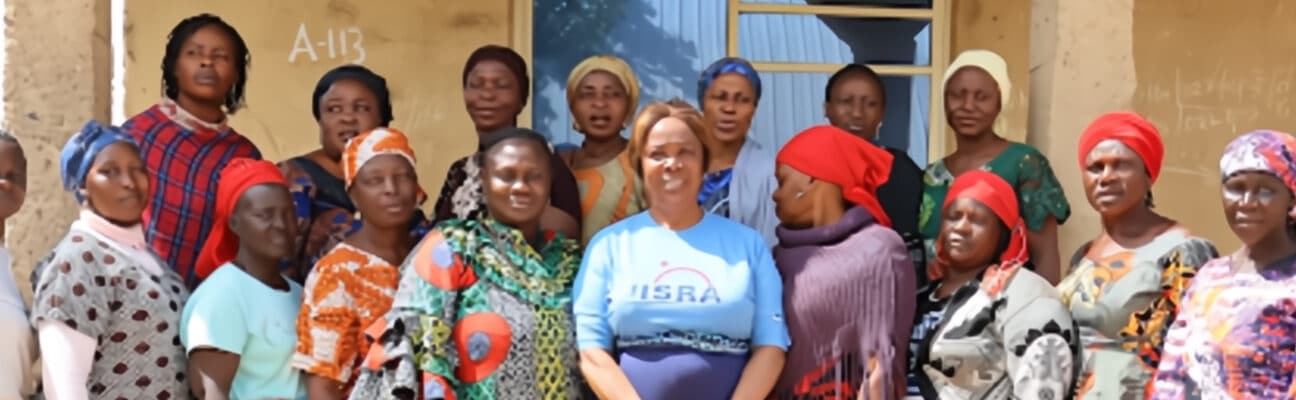
A prime example of this success was the adoption of participatory grant-making (PGM). We found PGM a highly effective vehicle for redistributing power as it placed funding decisions directly in the hands of grassroots, youth-led and women-led groups, bypassing traditional gatekeepers. Through this approach, young people and women collaboratively developed and decided on funding for activities to address FoRB challenges in their communities. The resulting activities often surprised INGO staff, such as inter-faith football games, rehabilitation of water points, or skills acquisition centres, but demonstrated tangible results, with one youth participant in Ethiopia noting: “This was the first time we felt like we did not have to resort to violence to be heard by our leaders.” Many PGM groups went on to formally register and continue their collaboration independently, demonstrating strengthened capacity and long-term sustainability.
The full experience of this approach is detailed in the JISRA PGM guide.
Join Bond’s Action for locally led development Working Group
Advance equitable, locally led development through shared learning, action and driving donor policy change.
Join the Working GroupLimits to localisation in the current development architecture
JISRA made a meaningful contribution to localisation and shifting power in programme design and implementation, especially at the local level where partners became “agenda-setters and conveners”. But significant barriers to full localisation remain.
Donor-driven constraints and historic expectations
The full devolution of resources and strategic influence is often limited by deeply entrenched constraints, historic expectations and a lack of funding flexibility. Local partners and stakeholders are used to being awarded grants with extensive rulebooks attached.
While JISRA did have comprehensive risk management, accountability and other regulations in place, a deliberate effort was made to reduce the burden and open opportunities for meaningful local decision-making. The donor’s flexibility was a key enabler of this. Throughout the project, donor staff demonstrated strong engagement and genuine interest, including by visiting local partners and communities, maintaining close contact with the Dutch Special Envoy for Freedom of Religion and Belief, and consistently keeping the door open for discussion and joint reflection.
Bureaucracy and asymmetry
Despite these efforts, in contexts with fewer partners, complex governance structures and rigid risk management procedures proved burdensome, as the proliferation of working groups and other engagements strained smaller organisations’ resources. Furthermore, differences in expectations between consortium and implementing partners created friction around coordination and the time required for approvals.
Tension between rights
Persistent challenges included the difficulty of meaningfully including women and young people due to deeply entrenched patriarchal and age-related norms, and a perceived conflict between gender rights and FoRB. This was addressed by strengthening inclusive participation and addressing shared community priorities to ensure women and young people were recognised as active agents of change.
A call for genuine partnership
The JISRA programme shows that successful power shifting relies less on establishing formal structures at the outset, and more on building a foundation of mutual trust, patience and flexibility at all levels.
It demonstrates that localisation is not just about transferring responsibility but about genuinely enabling local actors to become autonomous leaders whose credibility and contextual knowledge drive tangible outcomes.
For donors, INGOs and policymakers, the next step is clear: to institutionalise the flexibility and patience shown by the Dutch MOFA and JISRA consortium. This means designing long-term funding mechanisms, embracing local decision-making (like PGM) and addressing the deeply ingrained structural and normative barriers that currently limit the full, equitable devolution of resources and influence. Only by trusting local expertise and addressing systemic constraints can we ensure that localisation becomes a sustainable foundation for both peacebuilding and peaceful coexistence initiatives globally.
Related content

Ecology and empowerment
How is ecology and empowerment linked when it comes to international solidarity? Contributors from seven countries have attempted to provide some answers to this question in a new book coordinated by the F3E network. Isabelle Moreau shares the key findings.
AI could be a lever for localisation – but genuine partnership and investment is needed
From a year of dialogue with humanitarian practitioners across the ecosystem, the message is clear: AI could be a genuine lever for localisation – but only if there is renewed thinking, partnership and intentional investment, Ka Man Parkinson at Save the Children argues.
What it means to be “values led” as an international NGO
Many of us are grappling with how we can make INGOs more effective. As SOS Children’s Villages UK begins its new chapter as Right to Childhood, Alison Wallace and Harpinder Collacott share how a clear set of guiding principles can help organisations make difficult decisions at pace.

Category
News & views