

Reparatory justice and the future of African-led development
What does it really mean to put African voices, leadership and agency at the centre of development?
This question anchored the Africa at the Centre Convening in Accra in September. The conference brought together people from across the continent and African diaspora to explore how to build a stronger, more meaningful relationship. We think this question goes beyond representation.
‘Africa at the Centre’ requires more than acknowledging the continent’s potential. It means recognising the resources that already exist, strengthening the relationships that mobilise them and creating the conditions for African communities to shape their own futures. It also means being honest about history. About how centuries of slavery, colonisation and unequal global systems disrupted power and wealth, and how those legacies still shape development today. If Africa is to be at the centre, it must be Africa itself that defines what agency, justice and development look like on its own terms.
Change the architecture of development
For too long now, conversations about Africa’s development have often been shaped by frameworks, measures and expectations that do not reflect African realities. Reparatory justice invites us to ask difficult questions and act on them. Colonial systems have devalued African knowledge, cultures and ways of organising. The discussions in Accra highlighted the need to think about structural reform, about transforming the systems and institutions shaped by colonialism.
Changing the architecture means acknowledging the value of Afrocentric approaches to development which recognise Africa’s diversity, draw on its knowledge systems and reflect the priorities of its communities. It means moving away from the assumption that progress must always be understood through externally defined standards. And learning from measures that recognise the forms of contribution, care, solidarity and collective responsibility already taking place.
For UK-based INGOs, putting Africa at the centre requires more than consulting African partners or inviting them into existing spaces. It means examining how power operates within partnerships and being willing to accept different perspectives, learn from African partners and change established ways of working.
African values at the heart of African-led philanthropy
That question of agency also shapes how we understand philanthropy. One of the biggest misconceptions is that African philanthropy does not exist because it does not look like Western philanthropy. It does exist – it just operates on different values.
African communities and organisations are already contributing to the wellbeing of their communities, often in ways that are not fully captured or counted. Much of this is rooted in cultural practices and a collective responsibility for one’s neighbour. It can be an individual giving what they can, a community coming together, a family supporting a local cause at a milestone celebration or a business investing in a social enterprise. These are legitimate forms of philanthropy – they do not have to be professionalised to be valid.
Work by organisations like EPIC Africa, which maps African civil society, shows that many African NGOs are in fact supported by local individual donors and community funding. This challenges the narrative that African civil society is solely sustained by external funding.
Consider JoyFund, a Cameroonian, community-powered initiative supporting maternal and newborn health. By mobilising local giving – often linked to celebration and communal care – it helps pregnant women overcome financial and practical barriers to essential care. It is a powerful example of how everyday acts of giving can sustain African-led solutions.
The gap is not in the giving, but in the documentation. African communities need to define and document how giving actually happens – the processes, values and mechanisms – on their own terms. Understanding what African philanthropy really looks like and how to tap into it is fundamental to strengthening the agency Africa already has for its own development.
Recognising these approaches is part of reclaiming power. African philanthropy should not be treated as a lesser version of established models elsewhere, nor should it be expected to replace global philanthropy or government responsibilities. If historical systems have undervalued African knowledge and ways of organising, then part of addressing that legacy must be creating the conditions for these things to thrive.
Africa should not simply seek to be represented; it should have the power and agency to represent itself
Participant at the Africa at the Centre Convening Conference
Building relationships beyond borders: African diaspora
The African diaspora has a central, not peripheral, role to play in this shift.
One of the key strengths of the conference was bringing continental actors and diaspora communities together. Both have a shared interest and a shared belief in Africa’s future. Too often, these conversations happen in parallel with few opportunities for meaningful collaboration. The aim in Accra was to discuss ideas that keep African agency at the centre, wherever that agency is located, and to strengthen these bonds.
The African Development Bank estimates diaspora remittances to Africa reached US $104.6bn in 2024, surpassing both Official Development Assistance (around US $42bn) and Foreign Direct Investment (around US $48bn) to the continent. But even that understates the potential. AFFORD’s work suggests African migrants outside the continent have an estimated US$33.7bn in annual savings, and that excludes multi-generational diaspora. What we often called the “$100 billion economy” is therefore not the ceiling, it is the floor.
But the diaspora’s contribution goes far beyond money. The real value lies in what happens when that financial power is coupled with human capital: diaspora entrepreneurs, investors, professionals and changemakers bring intellectual skills, networks and other resources. When mobilised collectively through effective structures that ensure transparency and accountability, that combination of non-financial and financial can shift diaspora investment from a vital safety net into transformative investment for African-led development.
Good intentions alone are not enough if partnerships continue to reproduce old assumptions about whose expertise matters, who gets to lead and who is positioned as a beneficiary. That is where reparatory justice becomes practical, not just conceptual. For modern and historic diaspora communities, this history is not abstract – it is lived. The journey of displacement shaped by slavery, colonialism and modern forms of imperialism have disrupted not only wealth and power but also belonging and recognition.
Reconnecting Africa and its global diaspora in this context is a reparatory act in itself. It is a foundation for restoring relationships, re-centring devalued African knowledge systems and reclaiming collective agency. When Africa and diaspora collaborate on those terms – rooted in trust, mutual respect and a shared stake in Africa’s future – it becomes more powerful than a conventional development partnership. It is about rebuilding what was broken, to build what comes next.
The collaboration with AFFORD as a pioneering diaspora and development organisation, and as an event partner, underscored this point. Diaspora communities should not be seen as intermediaries for external agendas, but as part of Africa’s own agency with their own knowledge systems, forms of solidarity and collective responsibility.
It was also a reminder of the strength of collective action. For INGOs, including diaspora organisations, this means examining how power operates in our partnerships and being willing to change how we convene, listen and share space.
This is one of the key roles INGOs, as partners, can take: collaborating to convene and create regular, practical opportunities for diaspora, continental peers and supportive allies to learn, connect and work together as equals.
From conversation to action
The conversations in Accra reinforced that African communities and organisations are already creating solutions and contributing to their own development. The challenge is to ensure that institutions, funders and partners support this leadership rather than constrain it. That requires more than new language or commitments. Shifting power is not what others need to change; it requires us to reflect critically on our own institutions, practices and relationships. These changes must also reach communities, women, young people and groups that have historically been marginalised.
The Africa at the Centre co-conveners: WACSI, AFFORD, EPIC-Africa and Reos Partners created an important space for these conversations to be had and enthusiasm for the future ahead.
The opportunity now is for all of us working across the development sector, including Bond and its members, to consider what we will do differently, whether you are a funder, an INGO or another sector partner. Bond has a role to play in creating spaces for INGOs to reflect on how power operates in their organisations and partnerships.
Reparatory justice asks us to engage honestly with the past while changing the structures that continue to shape the present. Putting Africa at the centre must be more than an aspiration. It must be reflected in who leads, who decides, what is valued and where resources flow. Above all, it is to recognise that African agency is not something that needs to be granted; it is something that exists and must be encouraged, respected and supported.
Links to further reading:
Bond’s anti-racism and decolonising framework: Anti-racism and decolonising: A framework for organisations | Bond
Bond’s Locally led as an anti-racist practice guide: Becoming locally led as an anti-racist practice: a guide | Bond
WACSI (West African civil society institute): Africa At the Centre: Calls Grow for Africans to Shape their own Development Agenda – WACSI
Justice led approaches: Justice-led approaches can transform international development: Bond’s Future Dialogues discussion papers | Bond
Related blogs

Beyond solidarity: five years on, will our sector live its anti-racism values?
Five years have passed since the murder of George Floyd forced a global reckoning with racism. Yet in the UK international development sector, the question “what has changed?” still lands heavily, often with silence, discomfort, or defensiveness.

Who works in international development – and does it matter?
Equity, diversity and inclusion are not peripheral to the crises in international development, but central to both the problems we face and the solution.
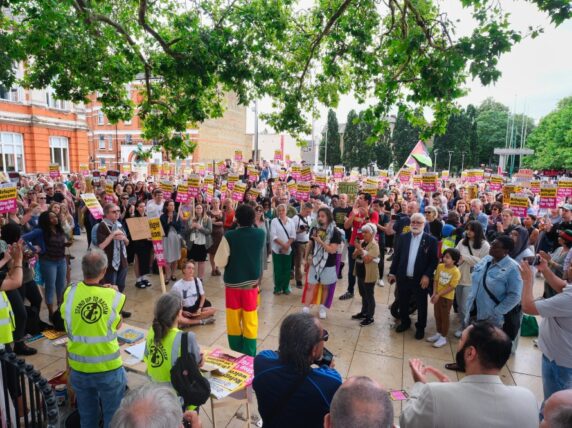
UK race riots one year later: confronting racism and demanding change
It has now been a year since the 2024 race riots erupted across the UK, a powerful and painful reminder of the racial injustice that continues to shape our society. As we reflect, we must ask ourselves: what has really shifted in the past 12 months?

Category
News & views