
Commitments in search of purpose?
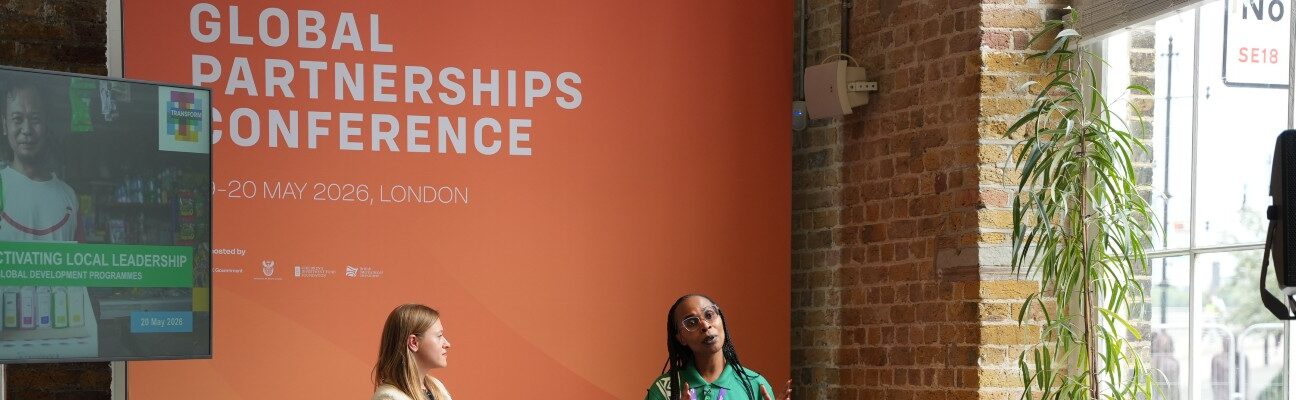
The recent Global Partnerships Conference was a welcome development but also a reminder of the liabilities shaping the UK’s domestic and international position. Both are often interdependent and interact in complex ways but remain unhelpfully – and dangerously – compartmentalised in British politics.
Two interrelated weaknesses sit at the heart of the UK’s current predicament.
The first is a lack of political direction: a failure to articulate a coherent vision of Britain’s place in a transitional international order. What is Britain’s purpose in a changing world, and what kind of nation does it aspire to be?
The second is a lack of domestic legitimacy: an inability to persuade the public that international engagement serves their interests and reflects their values.
Until these deficits are confronted simultaneously, the cycle of strategic ambiguity, public scepticism and perceived decline will continue, irrespective of how many conferences are convened or commitments are made.
In an age of what Catherine Fieschi, in Populocracy, describes as “jiu-jitsu politics” — where democracy’s own ideals are mobilised against liberal democratic institutions, and where authenticity is increasingly equated with bluntness rather than expertise — the current government has little to lose from adopting a more confident and principled stance. In an age that rewards conviction and clarity, steadfast leadership may prove a greater source of legitimacy than endless equivocation.
A crisis of strategic identity and its policy consequences
Ten years after Brexit, Britain remains caught between three competing visions of itself as a transatlantic ally, a European partner and a global convening power. The Global Partnerships Conference highlighted this tension. It demonstrated the UK’s desire to remain internationally present while avoiding difficult choices about what role it is uniquely positioned to play.
The Global Partnerships Compact – a flagship conference outcome – centres on three pillars of collaboration: financing for sustainable development and cooperation; knowledge, data, technology and innovation; and equitable, diversified partnerships that deliver results. Yet none of these priorities is new to the development agenda. The real test lies in how the government will translate these ambitions into action, and with whom it will partner to make them a reality.
Without clearer answers on trade-offs, funding and implementation, the Compact risks becoming another statement of intent rather than a framework for action. This is especially important as UK Official Development Assistance fell by over £1bn in 2025, with nearly a fifth of the budget spent domestically on refugee accommodation. The government plans to gradually reduce aid to 0.3% of GNI by 2027, equivalent to around £9.2bn, the lowest level since 1999.
A key outcome of the conference is the signal it sends – both about political intent and future priorities. Domestically, it projects a government that remains committed to global engagement despite persistent questions about the UK’s international influence in the wake of Brexit and successive reductions in aid spending. It also reflects the UK’s ambition to remain a consequential actor in international development, even against a backdrop of “thermostatic” public attitudes towards spending in general.
The domestic legitimacy of Britain’s international ambitions
The conference failed to connect the UK’s global role to its domestic context. How will the partnerships agenda secure public support and bring the British public along with it? Recent insights from the British Social Attitudes Survey show the British public more divided than ever. For example, the public are now evenly split between those who think migrants are economically and culturally beneficial and those who believe they have a negative impact.
As the domestic political landscape becomes more fragmented and contested, it will increasingly shape the UK’s ability to project influence abroad. The government’s challenge is not simply to define Britain’s role in the world, but to ensure its international ambitions remain grounded in a coherent vision that resonates with the public at home.
Against this backdrop, the UK’s decision not to become a direct participant in the conflict in the Middle East can be seen as an example of strategic restraint. Despite pressure from key allies, particularly the United States, the government has sought to preserve a degree of autonomy in its foreign policy and maintain its position as a credible and independent actor in an increasingly volatile international environment.
Independent policy on conflict management is also evident in the UK’s engagement on Sudan. This is characterised by deference to civilian solutions and actors, in contrast to the US approach to conflict management in the country. The UK’s position on the crisis primed it for what is primarily a humanitarian role. Given Sudan’s strategic importance to influential regional powers, maintaining the UK’s leadership position on humanitarian issues will prove valuable to its foreign policy portfolio.
Where do we go from here?
The Global Partnerships Conference shows the UK still possesses significant convening power. Yet convening is not the same as leading. In a world characterised by geopolitical fragmentation and domestic uncertainty, leadership requires more than commitments and compacts. It requires a clear sense of purpose, a willingness to navigate difficult trade-offs and a vision that connects Britain’s role abroad to the concerns of citizens at home. Until that connection is made, the UK’s partnerships risk remaining commitments in search of a purpose.
First, define a distinctive role in a transitional order
Rather than trying to lead everywhere, the UK should focus on where it can make genuinely distinctive contributions. Whether in development finance, humanitarian diplomacy, science partnerships or conflict mediation, influence is shaped more by strategic focus than by breadth for its own sake.
Reasserting a coherent humanitarian role is another priority. In the wake of aid cuts, there needs to be a more honest conversation about the impact of financial risk management practices, particularly bank derisking, on the sector, especially as it relates to localisation debates.
It may be time to go further and reconsider the usefulness of the term “localisation” altogether. As currently used, it has done little to enhance the agency of affected populations and has often obscured the growth of a complex intermediary bureaucracy within the humanitarian system.
Second, build domestic consent for international engagement
The UK’s global role cannot be sustained through elite consensus alone, yet this has been the prevailing approach for decades. As we prepare to welcome the next Labour leader and UK prime minister, the government needs to make a clearer case for how development, diplomacy and international partnerships directly serve domestic priorities, such as economic security, migration management, climate resilience and long-term prosperity at home. It is therefore encouraging that influential Labour figures, including ODI Global Chair Mark Malloch-Brown, are calling on Andy Burnham to reclaim the party’s leadership on international development and set a course to restore spending on overseas aid to 0.7% of national income.
That requires a more open and confident public conversation about the value of aid as part of a coherent national strategy, not as a discretionary add-on. It also means being honest about the kind of country Britain wants to be: one that understands its international engagement not only in strategic terms, but as part of an ethical and compassionate political identity.

Category
News & views