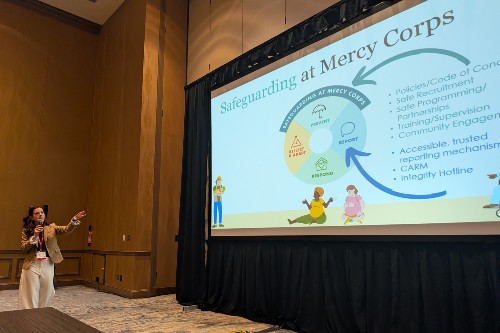
Mercy Corps’ Laura Ragan on why addressing gender-based violence requires collaboration across disciplines, sectors and geographies.
With the FCDO announcing that funding for safeguarding will be reduced disproportionately, the risk of the quality and consistency of safeguarding plummeting increases. How can we keep the communities that we work with safe?
 Tool
Tool
This tool provides safeguarding leads with some questions to consider when discussing their organisation’s survivor offer and considerations on reparations.
Nahedeh Rashti, Director of Safeguarding Support at Mercy Corps, on why being participant-centred and grounded in operational realities makes training work, even across screens.
As we mark the International Day for the Elimination of Violence against Women, let’s remember that ending violence against women begins with ensuring safety wherever women seek opportunity, and that includes microfinance.
The sector continues to experience shrinking funding and NGOs are having to reprioritise their budgets to stay afloat. Bond’s annual safeguarding survey gives us insight into what this means for our members’ abilities to keep the communities they work with safe.
How a unique collaboration between a palm oil business and two NGOs, one in the UK, the other in Sierra Leone, has seen child labour plummet.
Guidelines
If you have to close your programs abruptly, it is imperative that you continue to keep the communities you operated in safe. This guidance should support organisations to tackle this task.