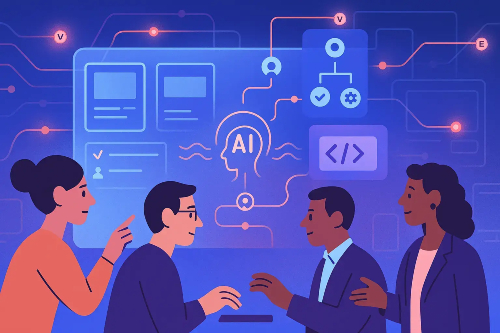
How can AI make evaluation more efficient without compromising responsible practice? Lucia Soldà and Angela Keenan share practical lessons from a Bond workshop on using AI across the evaluation lifecycle.
Liubov Rainchuk explains how World Jewish Relief has shifted from being a “donor-monitor” to a “partner accelerator” by taking a new approach to capacity strengthening. What are the four levels of partner needs?
Today, 14th October 2026, UK Foreign Secretary Ed Miliband has called for urgent reform to a global financial system that…
Rather than starting with a predefined set of indicators, outcome harvesting starts with a change that has happened, then works backwards to determine why it matters, who contributed to it and how. Drawing on eight years of experience, Jessica Schofield at Frontline AIDS shares three key lessons from adopting the approach.
Jess Gleeson, Head of People and Culture at ADD International, explains how the organisation has rethought the way it works as part of its commitment to wellbeing, flexibility and disability justice — and what it learned from a year of trialling a new approach.
How is ecology and empowerment linked when it comes to international solidarity? Contributors from seven countries have attempted to provide some answers to this question in a new book coordinated by the F3E network. Isabelle Moreau shares the key findings.
From a year of dialogue with humanitarian practitioners across the ecosystem, the message is clear: AI could be a genuine lever for localisation – but only if there is renewed thinking, partnership and intentional investment, Ka Man Parkinson at Humanitarian Leadership Academy argues.
Many of us are grappling with how we can make INGOs more effective. As SOS Children’s Villages UK begins its new chapter as Right to Childhood, Alison Wallace and Harpinder Collacott share how a clear set of guiding principles can help organisations make difficult decisions at pace.
Five years ago, the biggest providers of development assistance endorsed a landmark commitment to respect, support and incentivise civil society. Dylan Mathews, CEO of Peace Direct, looks back on the progress and the pitfalls.