
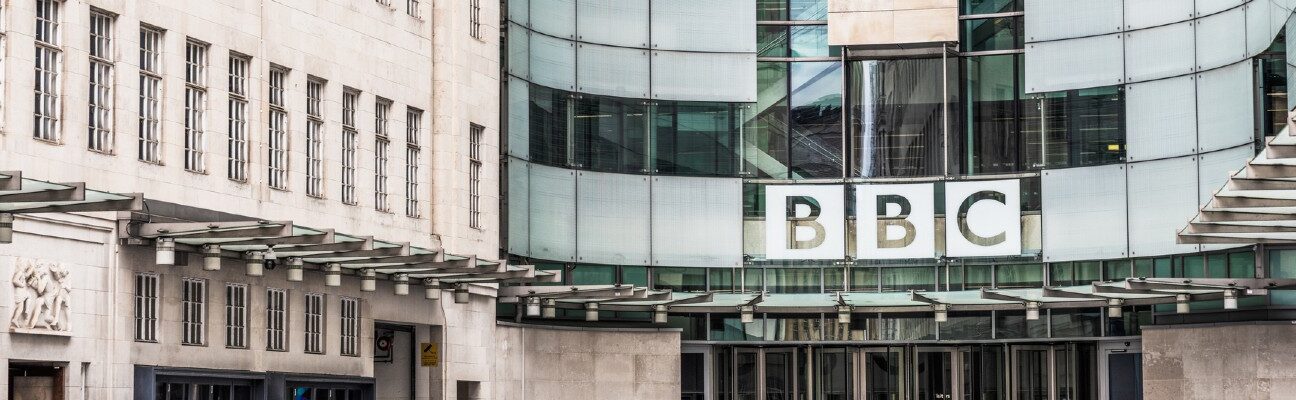
International storytelling at the BBC: your voice matters
The government has launched a public consultation that will inform decisions around the future of the BBC.
If you want to see more and better programmes about our world, we urge you to complete the survey. Here’s why it matters and some key questions to address.
Windows matter
The BBC provides a unique window onto the world for citizens across the UK. Its news, current affairs, documentaries and entertainment programmes bring stories about distant places, people and issues to a mass audience that’s unparalleled by other media. This matters.
Without these windows it’s harder to understand the world around us. We’re less likely to empathise with people beyond our borders, to situate our political and social challenges within the world that shapes them, and support actions and campaigns to address global injustices. For these reasons, among many others, the BBC remains a high-priority media platform for our members.
BBC on the ropes
The BBC’s future is less certain now than at any time in its one hundred-year history. At a time when trusted, respected and impartial media is needed more than ever, the BBC faces a perfect storm of external pressures. Competition from global streaming behemoths and social media is fracturing audiences, swinging cuts to and declining support for the licence fee have reduced income by nearly 40% in real-terms since 2010*, incomprehensible editorial decisions that have tarnished its reputation amongst many on the left while somehow fuelling coordinated attacks by right-wing media and shadowy lobby groups**, amongst many others.
Sensing weakness and opportunity are the forces of populism and extremism, circling ever closer. President Trump’s $10b lawsuit in the Florida courts, following a misleading edit of his January 6 speech, may be just the tip of the spear. Lurking in the wings of our own political theatre is the spectre of a Reform UK government, which is likely to seriously curtail the independence and scope of the BBC, if not shutter it altogether if they gain power at the next general election.
Opportunity knocks
But there is an opportunity to help save and change the BBC. The process to set its new Charter is underway and must be concluded by the end of next year (presumably) well before the next general election. Culture Secretary Lisa Nandy’s department (DCMS) published its long-awaited Green Paper in December alongside a consultation on the BBC’s public purposes, governance, funding mechanisms, and priorities.
The Secretary of State clearly understands the critically important role that the BBC plays in our national life, saying in the Foreword to the Green Paper: “I believe the BBC, alongside the NHS, is one of the two most important institutions in our country. While one is fundamental to the health of our people, the other is fundamental to the health of our democracy.”
The government recognises this is a critical moment for the BBC as it might be their only opportunity to save this national treasure, both from itself and from those who would dismantle it in an instant. Its detractors will surely mobilise their supporters to answer the survey in ways that would do most harm to the organisation, for example supporting a subscription-based funding model that would mean it’s no longer a universal public service. We must answer in ways that help ensure its survival.
Call for support
For those who wish to see the BBC revived as a critical institution, which delivers impactful programming about our world, that strengthens our democracy and supports civil society, we would urge you to complete the survey. Here are some key questions to focus on and important considerations:
Question 13
This question asks about the kinds of programmes that the BBC should be making more visible on its platforms like iPlayer and Sounds. Our research with the University of Leeds published last year, shows that programmes about people, places and issues around the globe are not being made prominent on the BBC’s platforms and the algorithms used are not recommending such content (unless the user has already shown an interest). This might be acceptable for commercial services like Netflix or YouTube, but it’s not how public service media should behave.
Thankfully, the first two choices in the survey give you an opportunity to indicate the importance of programmes that embrace public service values and offer spaces for international stories. They are:
- News and current affairs programming
- Arts, religious and international affairs programming (sometimes referred to as ‘underserved’ genres)
Question 16
This question asks how the BBC can increase the value and relevance of its news and current affairs across its services. It’s a long list, and you can select multiple answers, but the one that we think is critically important to the international NGO sectors is this:
- Reporting more international news stories
There is also a free text option (under ‘other’) in which you might like to recommend the BBC does more to cover countries, conflicts and issues around the world that barely, if ever, make the headlines.
Question 18
This is where you can show support for the BBC World Service, which provides news and current affairs to audiences around the world (through 42 separate language services), reaching a weekly audience of 450 million. The World Service funding has been cut dramatically (following George Osbourne’s decision to stop government funding and force the BBC to carry the costs) just as it comes under increasing pressure from well-funded Russian and Chinese state broadcasters that are desperate to usurp its position as a news source to the majority world.
Unfortunately, there is no free text box here to insist the government properly funds the World Service itself, but you can at least ‘strongly agree’ that the BBC must continue to perform its international role.
Please take time to complete the survey and make your voices heard on the future of the BBC. The International Broadcasting Trust will continue to engage with the government and all of the public service broadcasters to ensure that citizens in the UK continue to hear stories from and about our world, to strengthen our democracy and support our civil society. Please join us.
Gareth Benest is Deputy Executive Director of the International Broadcasting Trust (IBT)
* 38% cut in BBC Public Funding: VLV Analysis, Voice of the Listener & Viewer (21 October 2024)
** The War Against The BBC, Barwise & York, Penguin Books (2020)

Category
News & viewsThemes
Communications