
War in the Middle East: what we know so far
Strikes by the USA and Israel on Iran on Saturday, and Iran’s response across the region, have plunged the Middle East into its most serious open conflict in years.
Here’s what we know so far.
Why the strikes were launched
Relations between Iran and the United States have been deeply adversarial since the 1979 revolution, which brought an explicitly Islamic government to power and triggered a prolonged hostage crisis involving American nationals. In the decades since, the two countries have had no formal diplomatic relations, and Iran has remained a central flashpoint in regional and global geopolitics.
Inside Iran, the regime has faced mounting domestic unrest — most visibly through mass protests against the oppression of women. The government responded with lethal force: protesters have been killed in the streets or executed by the state, and as many as 30,000 people are reported to have died. Most recently, the regime cut off the internet to suppress dissent — a move widely condemned by human rights organisations.
Meanwhile, the conflict between Israel and Iran has escalated sharply in recent years. In 2024, Iranian drones and missiles were fired directly at Israel, and Israeli strikes killed Iranian officers. Last year’s Twelve-Day War saw both parties exchange strikes across the region, with the US backing Israel. Nuclear facilities in Iran were destroyed, airbases were hit, and political assassinations took place before President Trump brokered a ceasefire. This all followed a decades-long proxy conflict spanning Lebanon, Syria, and the Occupied Palestinian Territories.
The stated justification for this latest round of strikes differs depending on who is speaking. President Trump said publicly that the goal was “to ensure that Iran does not obtain a nuclear weapon.” But Secretary of State Marco Rubio has stated that the US acted as a pre-emptive measure in response to intelligence about an imminent Iranian attack.
What has happened across the region?
The scale and speed of developments have been significant. Iran’s Supreme Leader, Ayatollah Ali Khamenei — who had ruled the country since 1989 — was killed in the strikes, along with many other senior officials.
Among the most alarming incidents: a girls’ elementary school was struck by a bomb in Minab, killing 165 children and injuring dozens more — an act that has drawn widespread condemnation from humanitarian and child rights organisations.
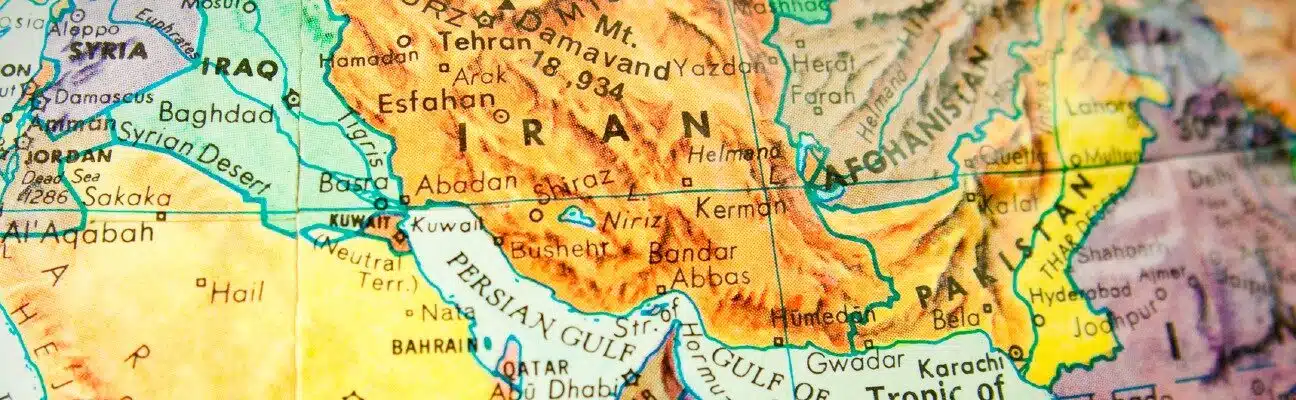
Iran has responded by launching missiles and drones at targets across the region, including Israel, Bahrain, Kuwait, Qatar, the UAE, Jordan, Saudi Arabia and ships in the Strait of Hormuz. In Lebanon, Israeli strikes responding to Hezbollah attacks killed 31 people in Beirut, and there are now reports that Israeli troops have entered southern Lebanon.
Hundreds of thousands of travellers have been left stranded across the region with almost all commercial flights grounded. President Trump has proceeded without congressional approval, prompting lawmakers to attempt to curb his powers. He has suggested the conflict could last “four or five weeks” but that the US was prepared for it to go “far longer.”
What is the UK’s position?
The UK government has not endorsed the strikes, but its stance has been carefully calibrated — and is coming under increasing scrutiny. Prime Minister Keir Starmer condemned Iran for escalating the conflict, stating: “I condemn Iran’s attacks today on partners across the region, many of which are not parties to this conflict.” At the same time, the UK has permitted US forces to use a British airbase in Cyprus to strike Iranian missile sites.
In a speech to the House of Commons on Monday, Starmer went further, stating that the government “does not believe in regime change from the skies” and invoking the lessons of the 2003 invasion of Iraq. “President Trump has expressed his disagreement with our decision not to get involved in the initial strikes,” he said, “but it is my duty to judge what is in Britain’s national interest.”
The humanitarian situation
The scale of civilian harm is already severe — and the conflict is only days old.
Tehran, a densely populated city of over 10 million people, has been among the primary targets. ReliefWeb has reported that as of 28 February, coordinated strikes across multiple Iranian cities produced immediate humanitarian consequences, with the Iranian Red Crescent recording 201 deaths and 747 injuries across 24 provinces within the first 24 hours alone.
The UN nuclear watchdog has called for restraint, and the UN estimates now put the civilian death toll at 550 since fighting began. UN Human Rights Chief Volker Türk has expressed deep alarm at the impact on civilians and civilian infrastructure — flagging not only the US-Israeli strikes on Iran, but also Iran’s retaliatory attacks on states across the region and Hezbollah’s subsequent entry into the conflict.
With multiple conflict theatres active simultaneously, flight suspensions, port disruptions in the Gulf, and active combat zones all creating barriers to response, the true scale of humanitarian need is likely far greater than current figures suggest.
What comes next?
With no ceasefire in sight, conflicting justifications from the US government, and a conflict already spreading across multiple countries, the risk of further escalation is concerning. For UK civil society, this moment demands urgent engagement: with the FCDO on the UK’s diplomatic posture and humanitarian obligations; with UN mechanisms on civilian protection and access; and with the public on the human cost of what is unfolding.
Bond will continue to monitor developments, coordinate member responses, and facilitate engagement with the government as the situation evolves. If your organisation is responding to this crisis or has updates to share, please get in touch.

Category
News & views