
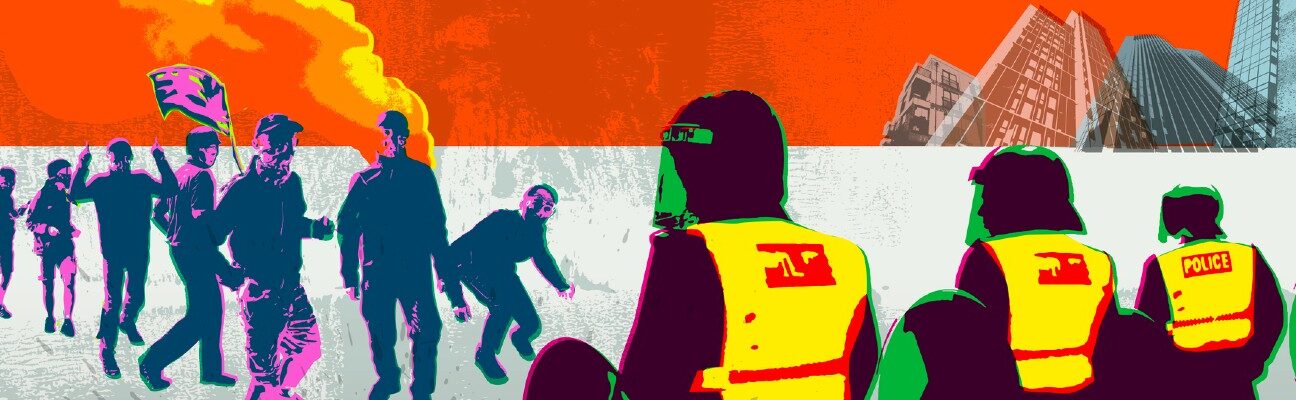
What is happening to UK Civic Space? Trends and analysis from 2025 – 2026
From the introduction of new anti-protest legislation to a slower start to the Civil Society Covenant, civic space in the UK has continued to come under pressure over the past ten months.
Our latest report, the third and final in its series, identifies trends across UK civic space that are shaping the environment for civil society in the UK.
Though this final report is shorter than the previous versions, we have seen trends both intersect and deepen from previous years. We would encourage readers to view our previous annual reviews to see how trends have developed and shaped the environment in the UK over time.
What has happened in UK civic space over the past ten months?
Trend 1: The government’s position on protest right becomes clearer.
Over the last ten months, the government’s position on protest rights in the UK has become clearer as new, restricting legislation has made its way through parliament. The introduction of the Crime and Policing Bill, as well as further amendments on cumulative disruptions, will bring further restrictions and increased measures to those who wish to engage in peaceful protests.
Though one of the promises made in the Civil Society Covenant was that the government would protect the right to engage in peaceful protest, the government have been vocal that there are no plans to repeal the anti-protest legislation passed by previous governments, but will instead proceed with a review of public order legislation.
Trend 2: Increased restrictions for pro-Palestine protesters
This year has seen increased restrictions for pro-Palestine protesters.
The ban on proscribed group, Palestine Action, has resulted in over 2,000 arrests for those supporting a proscribed terrorism group. The proscription bringing along with it confusion over what constitutes as support for a proscribed group, exacerbated by the recent ruling at the High Court that the prescription was unlawful, which the government has challenged.
As tensions have increased over the proscription and increased restrictions, actions taken by the government have also been criticised both within the UK and internationally.
Get the report
Download nowTrend 3: Rise in nativist populism threatens migrants, charities and rights
Public debate on asylum and migration has become increasingly intense, and is further reinforcing social divisions, while anti-migration rhetoric and policies are now mainstream. Tensions over the past ten months have risen across the country, and support for political parties that adopt anti-rights, specifically anti-migration, positions is growing.
The support for anti-rights moments have led to several charities closing their doors or increasing security measures to ensure safety for their staff and volunteers. This could lead to certain issues that may feel less safe to engage with in advocacy or campaigning.
Trend 4: A slow start to the Civil Society Covenant
After almost a year of consultation with civil society, the government published the Civil Society Covenant with support from the highest levels of office. However, months after the launch, momentum across civil society began to dwindle as little progress had been made towards the implementation of the covenant.
The government are now showing signs of progress, however there is plenty to do to ensure the Covenant lives beyond the current government and that it meets the aim of giving civil society a home at the heart of government and strengthening partnership working.
A message of hope
Over the past three years we have highlighted trends across UK civic space. While we have identified trends that include increased restrictions to protest rights, the rising use of facial surveillance without legislation to safeguard the use of it, and less people engaged in elections, it is important to recognise the positive developments and increased solidarity across sectors.
Charities across civil society have stood shoulder to shoulder on multiple occasions with those who have come under attack, a new Elections Bill will bring in votes for 16- and 17-year-olds as well as proposals for bank cards to be included in Voter ID to encourage an increase in democratic participation. There is also hope that the Civil Society Covenant will bring an increased partnership between civil society and government.
It is possible that, in the near future, the UK could have a government less committed to human rights, less tolerant of criticism and dissent, and less willing to engage with diverse voices across civil society. Our hope is that by discussing these trends, civil society and campaigners are better informed about the changing operating environment in the UK and can use this knowledge to campaign for change.

Category
News & viewsThemes
Civic space