
One year on from Syria’s political transition, Action For Humanity warns of a critical moment for recovery
One year after Syria’s political transition on 8 December 2024, the country stands at a fragile crossroads.
Violence has decreased, roads have reopened, and over one million Syrians have returned home. Families are stepping into towns scarred by conflict, seeking safety, stability and a chance to rebuild their lives.
Yet, the scale of humanitarian need remains immense. As of 2025, 16.5 million people across the country, more than two thirds of the population, are estimated to need assistance. Essential services such as water, healthcare and education are operating at only 40-50% of pre-conflict capacity, limiting communities’ ability to absorb large-scale returns. At the same time, 7.4 million people remain internally displaced, adding further pressure on already stretched services.
It is in this context that Action For Humanity has released its new report, Returning To Hope: One Year After Liberation, highlighting the stark reality facing families and outlining the urgent steps required to stabilise high-return areas. The report reflects 14 years of Action For Humanity’s work alongside Syrian communities, one of the largest locally embedded humanitarian efforts in the country.
A landscape defined by destroyed systems
In Syria, today’s humanitarian needs are shaped less by ongoing conflict and more by the long-term destruction of essential services.
The scale of physical destruction is profound. According to the latest assessment by the World Bank, rebuilding of Syria’s damaged infrastructure and buildings will cost an estimated US $216 billion – covering homes, schools, hospitals, water systems, roads, and other public assets.
As services remain degraded and rebuilding is slow, families face unreliable water supply, overstretched clinics, and limited access to livelihoods. These gaps increase humanitarian need even in areas where stability has improved.
Explosive ordinance: the defining barrier to recovery
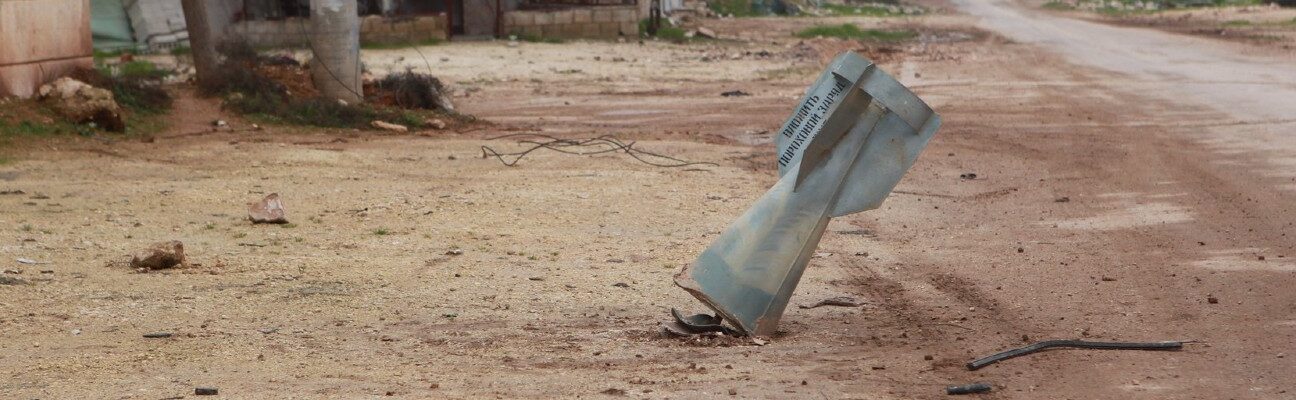
AFH’s report identifies explosive ordinance contamination as the single largest structural barrier to progress. Mines and unexploded ordinance remain in farmland, homes, schools and roads. More than 650 explosive incidents were recorded in the past year alone, many affecting children.
This contamination is blocking reconstruction, preventing agricultural recovery, slowing school reopening, and limiting safe return. Unless clearance is funded and scaled, recovery efforts will remain severely constrained.
Rising pressure from accelerating returns
The rapid return of over one million people since late 2024 has added significant pressure to already weakened systems. In many areas, the pace of return now exceeds the capacity of water, health, and education services to meet basic needs.
Communities that were already struggling with limited access to electricity, medical care, safe water, and functioning schools are now accommodating large numbers of returning families with very little additional support.
“The rapid return of over one million people since December 2024 is outpacing service capacity, creating a critical humanitarian challenge.”
Economic vulnerability deepens needs
Economic decline remains acute. Rising prices, damaged markets and reduced employment opportunities have pushed 90% of Syrians into poverty, with 66% living in severe poverty. Women-headed households and people with disabilities are disproportionately affected, often facing higher barriers to income and services.
Food insecurity affects more than 14.5 million people, with damaged irrigation systems, unsafe farmland, and price instability reducing access to basic goods. Many households rely on humanitarian assistance simply to survive.
Local organisations leading early recovery
Despite immense challenge, people in Syria are driving much of the early recovery effort. AFH’s report highlights how communities are repairing homes, replanting fields, restoring water points and reopening schools with limited resources.
But the report is clear: recovery is outpacing support. Local initiatives are happening organically, but without predictable, multi-year funding, these fragile gains risk being lost.
A call for coordinated, long-term investment
Action For Humanity urges international donors and policymakers to:
- Make explosive ordnance clearance a prerequisite for reconstruction and agriculture
- Prioritise high-return areas for multisector investment
- Support coordinated, multi-year early recovery packages
- Rebuild essential public services with predictable financing
- Restore the workforce
- Strengthen Syrian-led organisations
- Link agricultural recovery with clearance efforts
- Revitalise markets and livelihoods
- Adopt integrated programming
Syria is rebuilding – but this window will not remain open indefinitely. With sustained, coordinated investment grounded in dignity, safety and community-led action, recovery is still possible. Without it, progress risks stalling, leaving millions trapped in prolonged crisis.
Read the full report: Returning To Hope: One Year After The Liberation

Category
News & viewsThemes
Humanitarian